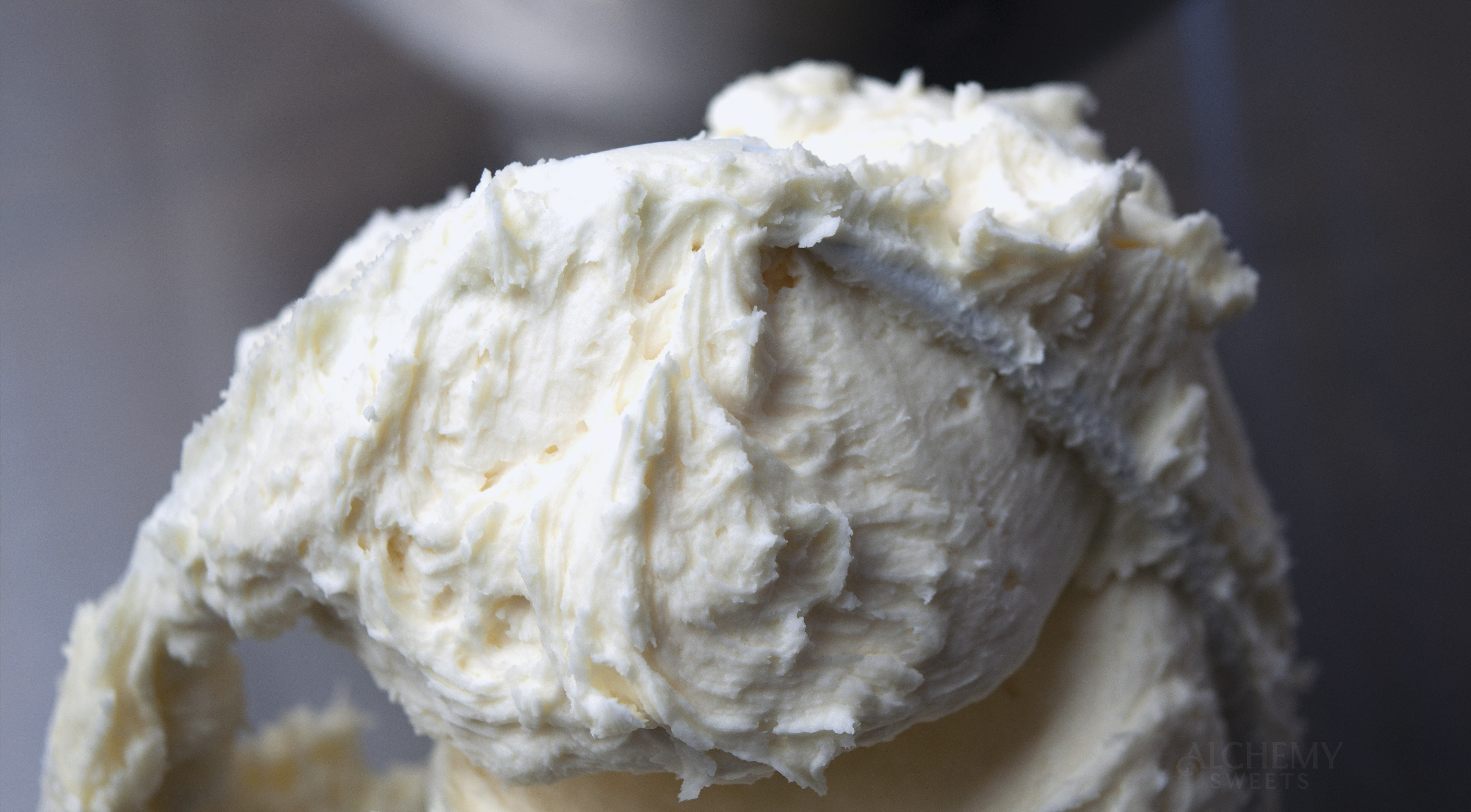
Faux Swiss meringue buttercream made with meringue powder instead of egg whites, firm enough for piping flowers and smooth enough for filling and frosting cakes.
Before we start: this is not an egg-free recipe. Meringue powder is made from dried egg whites and still contains egg. If you have an egg allergy, this recipe is not suitable for you.
When I was planning to open a home bakery, I wanted to use Swiss meringue. It’s my personal favorite buttercream, silky, not overly sweet, and versatile enough for filling cakes, icing, and piping flowers. But in my area I wasn’t allowed to use eggs in buttercreams or fillings. Meringue powder is shelf stable, and I’d already seen it being used by other home bakeries the same way it’s used for royal icing and sugar cookies, so I figured it was worth trying with the same method as regular Swiss meringue. It worked. The taste isn’t identical but it is still really good.
Even if you have no regulatory reason to make this, it’s still worth trying. It gives you that same silky result as traditional Swiss meringue but it’s genuinely easier to make. No thermometer, no egg safety concerns, no leftover yolks, and meringue powder keeps in the cupboard so you use what you need and put the rest away. The extra stabilizers in the powder don’t hurt either. 😉
JUMP TO
What makes this “faux” Swiss meringue?
Traditional Swiss meringue buttercream starts with egg whites and granulated sugar heated together over a double boiler, whipped into a meringue, then finished with butter. This recipe follows that exact same process, just with meringue powder + water standing in for the egg whites.
You might have seen other mock Swiss recipes that use powdered sugar and pasteurized egg whites, skipping the heating step entirely. That’s a valid shortcut if you have access to pasteurized eggs. Where I am, pasteurized eggs aren’t considered a low-risk food for home bakeries, so that version isn’t an option. Meringue powder is shelf stable and doesn’t require refrigeration, which makes it low-risk and practical to keep on hand. That’s why this recipe exists. It’s not the easier version, it’s the compliant one.
I also don’t swap the granulated sugar for powdered sugar, the way a lot of mock Swiss recipes do. Heating granulated sugar over the double boiler and dissolving it properly is what gives this buttercream that smooth, silky texture. It’s worth the extra few minutes, and it helps dissolve the meringue powder fully too.
Meringue powder does contain additional ingredients you wouldn’t find in traditional Swiss meringue, like stabilizers, but they don’t affect the method and can actually work in your favor for consistency.
No thermometer needed. Since meringue powder is already pasteurized, you’re just heating to dissolve the sugar, not to a specific temperature. Stir and check with your fingers until you feel no graininess at all.

Meringue powder
Not all meringue powders are created equal. I’ve tried a couple different brands and they do behave differently. Some take longer to whip up, some reach stiff peaks faster, and the powder-to-water ratio varies quite a bit between brands. That’s why this recipe doesn’t give a single fixed water amount. Check your package for the recommended ratio and follow that instead.
Some meringue powders already contain cream of tartar as a stabilizer, while others use different stabilizers entirely. If yours already has it, you may not need to add extra. If it doesn’t, that’s when the optional addition at the whipping stage can really help, especially in humid weather.
You can find meringue powder at most craft stores like Michaels, which carries both Satin Ice and AmeriColor. Check the ingredients label before buying if you can. Whatever brand you use, just give it more time than you think it needs if it’s slow to come together. It will get there.

Tools & Equipment
- Stand Mixer or hand mixer
- Small sauce pan or Double boiler
- Mixing bowls
- Kitchen scale
- Measuring cups and spoons
- Rubber Spatula
Ingredients
Meringue powder + water: Reconstituted according to your package instructions to equal approximately 5-6 egg whites. Different brands have different powder-to-water ratios, so follow what your package recommends rather than a single fixed amount.
Unsalted butter: I prefer to use unsalted butter so I can control the amount of salt added overall.
Granulated sugar: I stick with granulated sugar for this recipe, and dissolve in the meringue powder mixture. The powder itself has to dissolve.
Vanilla extract: I generally go for a vanilla flavor, but any flavor extract or emulsion that won’t affect the color will work.
Salt: If the buttercream is too sweet still, the salt helps balance it.
Optional cream of tartar: Even if your powder contains stabilizers, I still find a small addition helps in humid conditions. Add 1/4 tsp at the whipping stage at your own discretion.
How to make it
1. Wipe your bowl Before transferring, wipe out your stand mixer bowl and whisk attachment with a little lemon juice or white vinegar. Any trace of fat in the bowl will prevent the meringue from forming properly, this step takes five seconds and is worth it every time. Yes, this applies with Meringue powder as well.
2. Prepare your meringue base Whisk together the meringue powder and water in a heatproof bowl until combined. Add the granulated sugar and set the bowl over a pot of simmering water (double boiler). Heat the mixture, stirring occasionally, until it’s foamy, slightly warmed, and the sugar is fully dissolved, you shouldn’t feel any graininess when you rub a bit between your fingers.
Note: No double boiler? No problem. A small saucepan with your stand mixer bowl set on top works perfectly. The bowl is wider than the pan so it sits above the water rather than touching it, which is exactly what you want.

3. Whip to stiff peaks Transfer the warm mixture to your stand mixer fitted with the whisk attachment. Whip on medium-high until stiff, glossy peaks form and the bowl is no longer warm to the touch, about 5-7 minutes. If you’re adding cream of tartar, sprinkle it in once the mixture is foamy and starting to build volume, before you hit stiff peaks.

4. Add the butter Switch to the paddle attachment (or keep the whisk, either works). With the mixer running on medium, add butter one cube at a time, waiting until each piece is fully incorporated before adding the next. Take your time here.

5. Finish and adjust Once all the butter is added, mix in the salt and vanilla (or whatever flavoring you’re using). The buttercream may look broken or curdled at this point, keep mixing. It will come together. See the troubleshooting section below if it needs a little extra help.

6. Run the paddle on speed 1 for 10-15 minutes. This is the step most people skip but it makes a real difference, especially if you’re piping flowers. You’ll see the texture shift from fluffy to smooth and dense as the air bubbles work their way out. (see FAQ for comparison)

Troubleshooting & FAQ
My meringue isn’t forming. Two most common reasons.
- First, fat residue on your bowl or whisk. Even a tiny amount is enough to prevent the meringue from forming. Here’s the simple version: egg whites work by trapping air in tiny bubbles as they’re whipped. Fat coats those bubbles and collapses them before they can build up into a foam. A quick wipe with lemon juice or white vinegar neutralizes any fat residue and takes five seconds. Don’t skip it.
- Second, too much water. This is specific to meringue powder. Too much water dilutes the egg white proteins and they can’t build structure. Always follow your package’s recommended ratio and measure by weight if you can.
My buttercream looks curdled. Keep mixing! This is almost always just a temperature issue. If the bowl is too cold, the butter can seize up before everything emulsifies. Try holding the bowl briefly over your double boiler for a few seconds, or use a kitchen torch to gently warm the outside of the bowl. Once the temperature evens out, the buttercream should smooth out and come together.
My buttercream is very airy and has air pockets in it. Switch to the paddle attachment and mix on the lowest speed for 10-15 minutes. You’ll see the texture shift from fluffy and light to smooth and dense. Alternatively, let it rest overnight in an airtight container and it will settle on its own. When you’re ready to use it, rewhip it. It may look curdled at first, but keep going and it will come back together.

How does this behave compared to buttercream made with real egg whites? Real egg whites are a bit more reliable when it comes to whipping. With meringue powder, the ratio of powder to water matters a lot, too much or too little water and you may struggle to reach stiff peaks. Powder also contains stabilizers and fillers that can affect how it behaves, though those same stabilizers can actually make the finished buttercream more consistent once it comes together.
Can I use icing sugar instead of granulated sugar? Technically yes, but most icing sugar contains cornstarch which can interfere with the meringue structure and make it harder to whip to stiff peaks. If you want to substitute, use a pure icing sugar with no cornstarch added. Otherwise stick with granulated. Heating it over the double boiler dissolves it fully and that’s what gives this buttercream its silky, stable texture. It’s worth the extra few minutes.
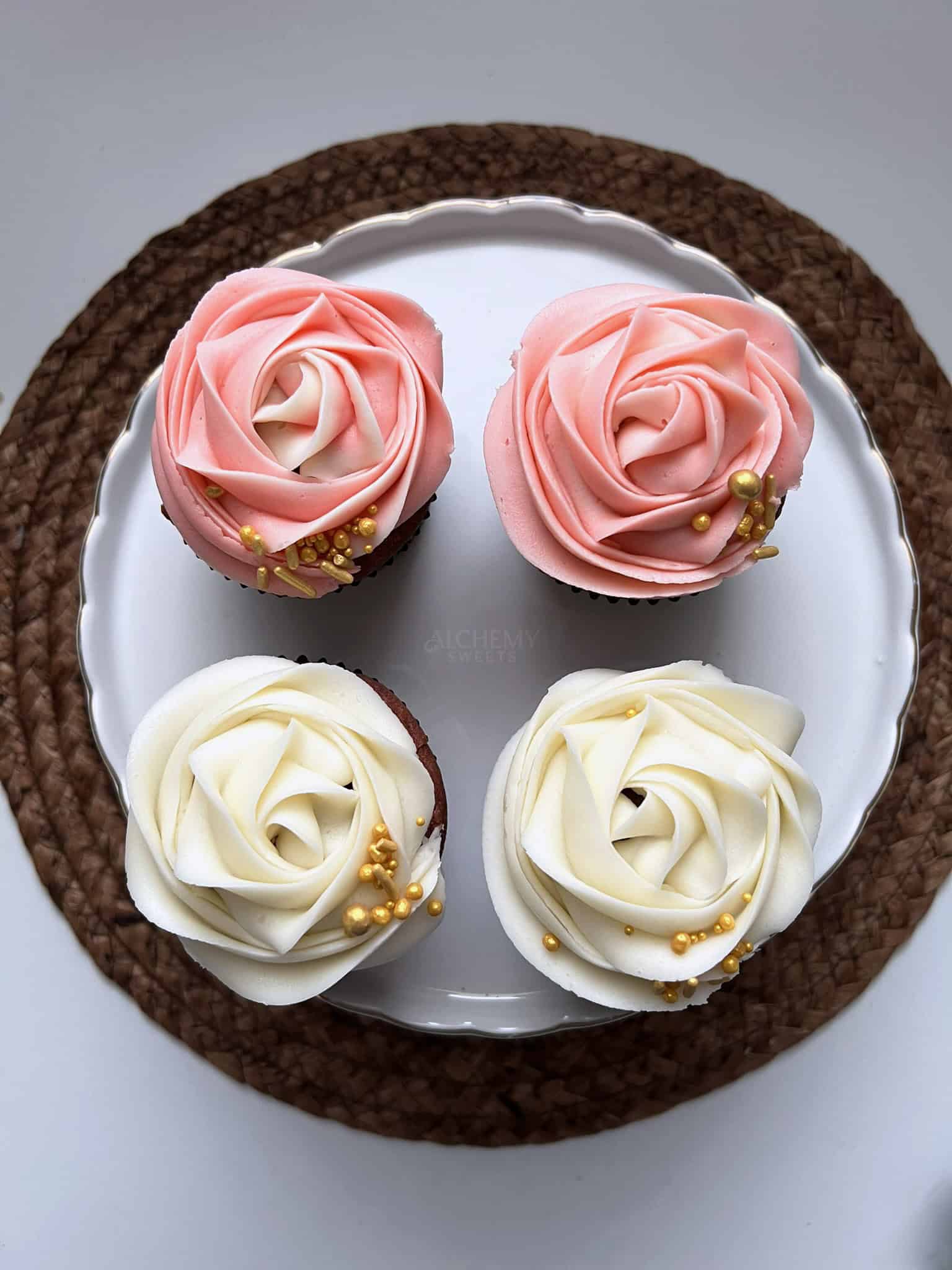
How does this compare to American buttercream? The biggest difference is sweetness. This buttercream has a fraction of the sugar, so it tastes more buttery and balanced rather than sweet-forward. It’s also much silkier in texture and doesn’t form a crust the way American buttercream does. The tradeoff is stability in uncontrolled conditions. American buttercream holds up better in heat and humidity, so if you’re setting up an outdoor display or working in a warm space without climate control, keep that in mind. For indoor use at normal room temperature this buttercream is quite stable. I’ve had piped roses sitting out for weeks and they held their shape just fine.
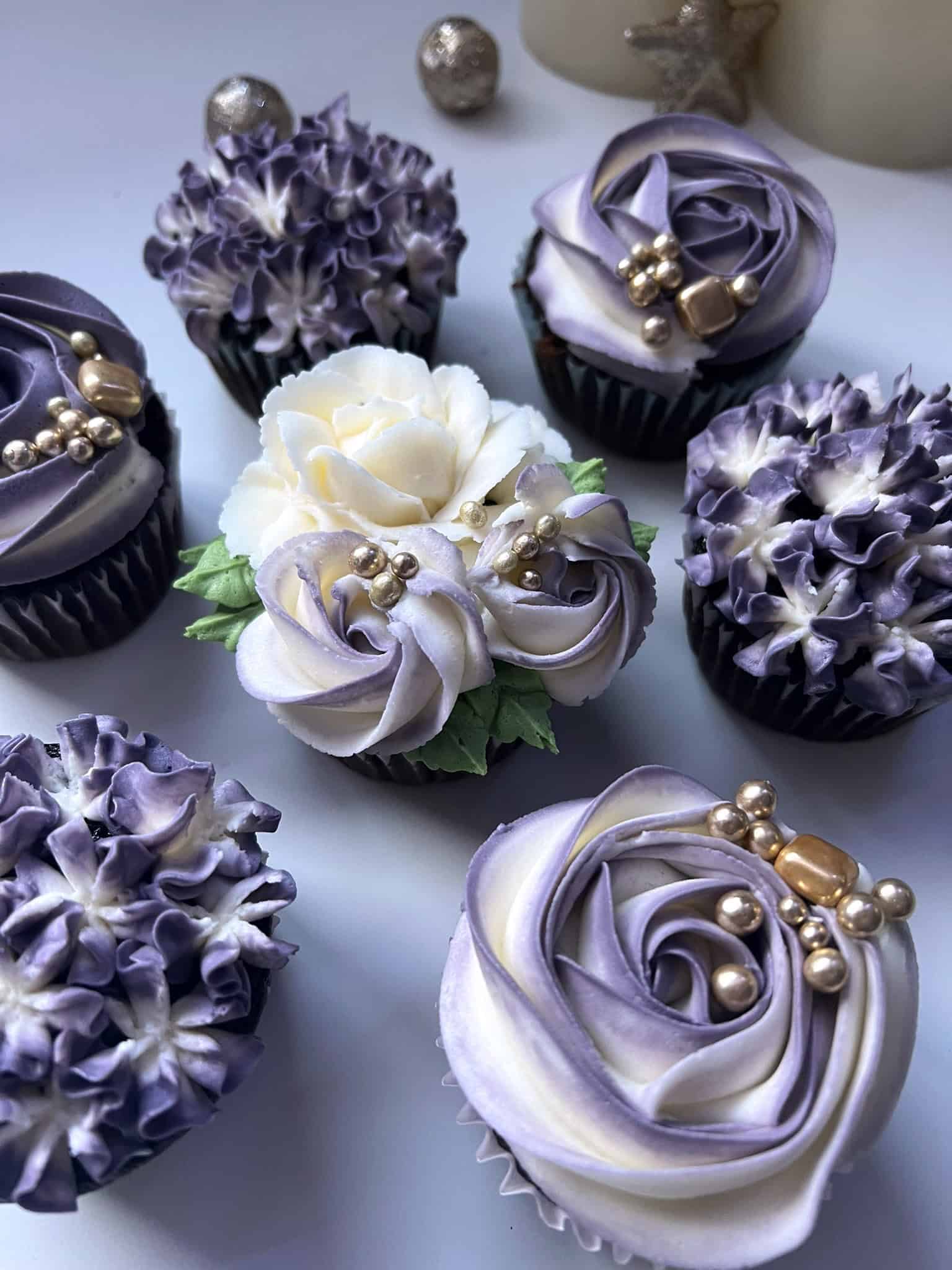
What Can I use This Buttercream For? Almost anything, it’s stable enough to pipe some florals, and also smooth enough to ice and fill cakes. It’s quite versatile! Here are a few things I have piped with this buttercream.
Can I use this buttercream for piping flowers? Yes. For best results, keep your buttercream on the cooler side. If your buttercream softens while you’re working, pop it in the fridge for 10-15 minutes to firm back up, then give it a quick stir before continuing.
How do I store it?
- Room temperature: 2-3 days in an airtight container, kept away from heat.
- Fridge: Up to 2 weeks in an airtight container. Bring to room temperature and give it a quick stir with a spatula or spoon before using.
- Freezer: Up to 3 months. Thaw in the fridge overnight, then bring to room temperature and stir before using.
This has become one of those recipes I keep coming back to. It’s strong enough for flowers when I need clean petals, but still smooth enough to use on cakes without fighting it. If you’ve been looking for something that sits between decorative and practical, this is a really solid place to start.
If you want to try it straight away, the learn to pipe buttercream flowers post is a good place to start. Tag me if you make something with it!

Faux Swiss Meringue Buttercream (Made with Meringue Powder)
Equipment
- stand or hand mixer
- small sauce pan OR double boiler
- kitchen scale
- mixing bowl
- Measuring cups and spoons
- spatula
Ingredients
- 70-90g g meringue powder
- 120-135 g warm water follow your package to reconstitute 5-6 egg whites
- 300 g granulated sugar
- 500 g unsalted butter cool but pliable
- 2-3 tsp vanilla extract
- ¼ tsp salt
- ¼ tsp cream of tartar optional
Instructions
- Wipe out your stand mixer bowl with a little lemon juice or white vinegar. Any trace of fat will prevent the meringue from forming properly. It takes five seconds and is worth it every time.
- Combine meringue powder, water, and sugar. Heat gently over a double boiler, stirring until fully dissolved – no boiling, just smooth and dissolved.70-90g g meringue powder, 300 g granulated sugar

- Transfer to stand mixer with whisk attachment. Whip on medium-high until stiff, glossy peaks and the bowl feels cool to the touch.¼ tsp cream of tartar

- Switch to paddle attachment. Add butter one tablespoon at a time on medium speed – it may look curdled partway through, keep going.500 g unsalted butter

- Once it comes together, add vanilla and salt. Taste and adjust if needed.2-3 tsp vanilla extract, ¼ tsp salt

- Keep the paddle on speed 1 for 10–15 minutes. This pushes out the air bubbles and gives you that silky, dense consistency. You’ll actually see the texture change.