*post was written under previous alias; Blossom & Cake
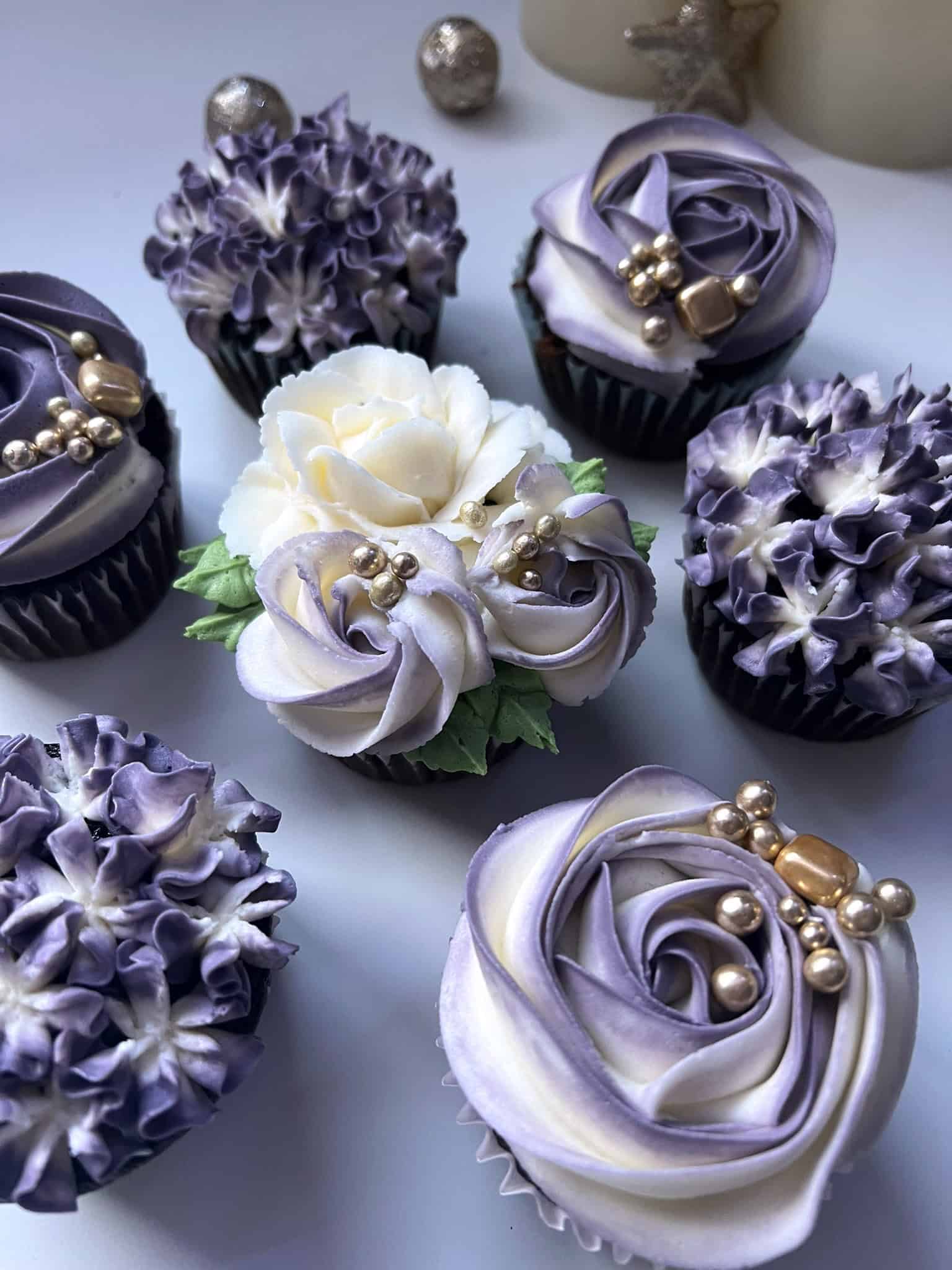
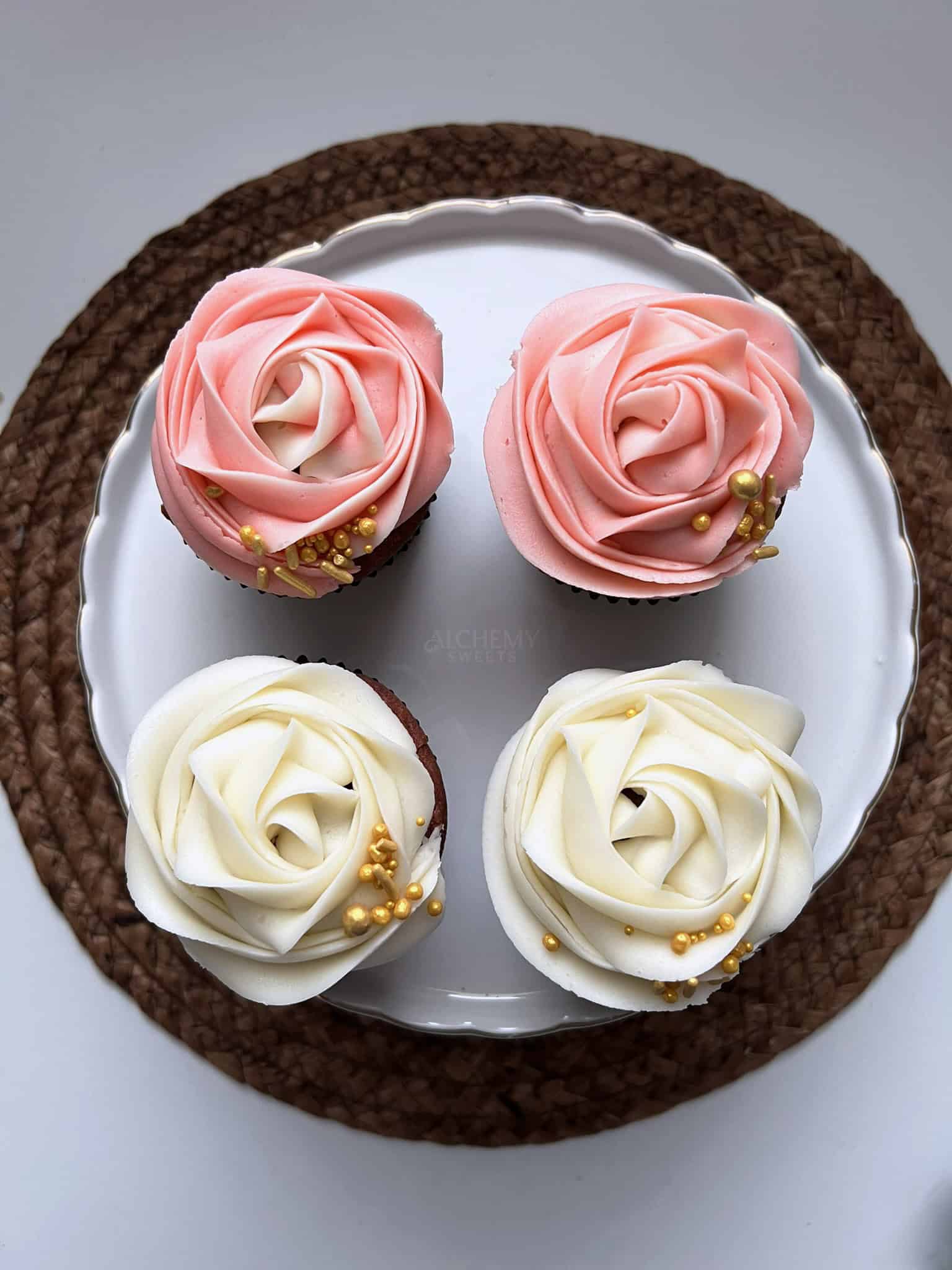
When it comes to piping buttercream flowers, the recipe you use makes all the difference. You need a buttercream that’s stable enough to hold intricate petal shapes, smooth enough to pipe cleanly, and firm enough to support stacked layers without melting or losing definition.
This is one of my go-to recipe for all my flower piping work. It’s a classic American buttercream with a ratio that creates the perfect consistency—not too soft, not too stiff. It holds shapes, doesn’t crust too quickly while you’re working, and the flavor is relatively balanced (not overly sweet like some recipes). Whether you’re piping roses, hydrangeas, or daisies, this recipe gives you a reliable base to work with.

WHY THIS RECIPE WORKS
The Perfect Consistency for Piping
The key to this recipe is the butter-to-sugar ratio. Too much butter and your flowers will be too soft and won’t hold their shape as well. Too much sugar and the buttercream becomes grainy and WAY too hard to pipe. This recipe strikes the right balance; firm enough to support detailed petals, but soft enough to pipe smoothly without hand fatigue.
Use room temperature butter! Cold butter creates lumps, and melted butter makes the frosting too loose. Room temp butter whips into a smooth, stable consistency that’s easy to color and pipe with.
Unlike Swiss or Italian meringue buttercream (which require cooking egg whites), this American buttercream is beginner-friendly and comes together in minutes. It’s also very stable at room temperature, which matters when you’re spending an hour piping a cake and don’t want your flowers drooping halfway through.
What You’ll Need

Equipment:
- Stand Mixer or hand mixer
- Mixing bowl
- Rubber spatula
- Measuring cups and spoons
- Kitchen Scale
Ingredients:
- 500g (454g) unsalted butter, room temperature
- 1 kg (908g) powdered sugar (icing sugar), sifted
- 1-2 teaspoon hot water
- 2-3 teaspoon vanilla extract or flavoring of choice
- Pinch of salt
A Note on Measurements:
This recipe uses a 1:2 butter-to-sugar ratio for the perfect piping consistency.
In my region, butter comes in 454g blocks and powdered sugar comes in 1kg bags. If you use the full butter block (454g), you’ll need to measure out 908g from the sugar bag to maintain the correct ratio.
Alternatively, you can measure 500g of butter and use the full 1kg bag of sugar—either way, the ratio stays consistent and you’ll get perfect piping buttercream!
Use whichever measurements work best for the products available in your area.
Step-By-Step
Beat the butter: Cut butter into smaller pieces. Beat room temperature butter on medium speed for 2-3 minutes until light and fluffy. The butter should stick to the sides of the bowl.


Add sugar: Gradually add powdered sugar, mixing on low. If you have a cover for your mixer, use it. Otherwise, drape a towel or plastic wrap over the bowl to prevent a sugar cloud!


Add flavoring: Once sugar and butter are mixed, add vanilla and salt then beat on low-medium for 5 minutes. If you’re in a cooler climate, also add hot water to keep the buttercream soft and pipeable, skip the hot water if your kitchen is already warm.


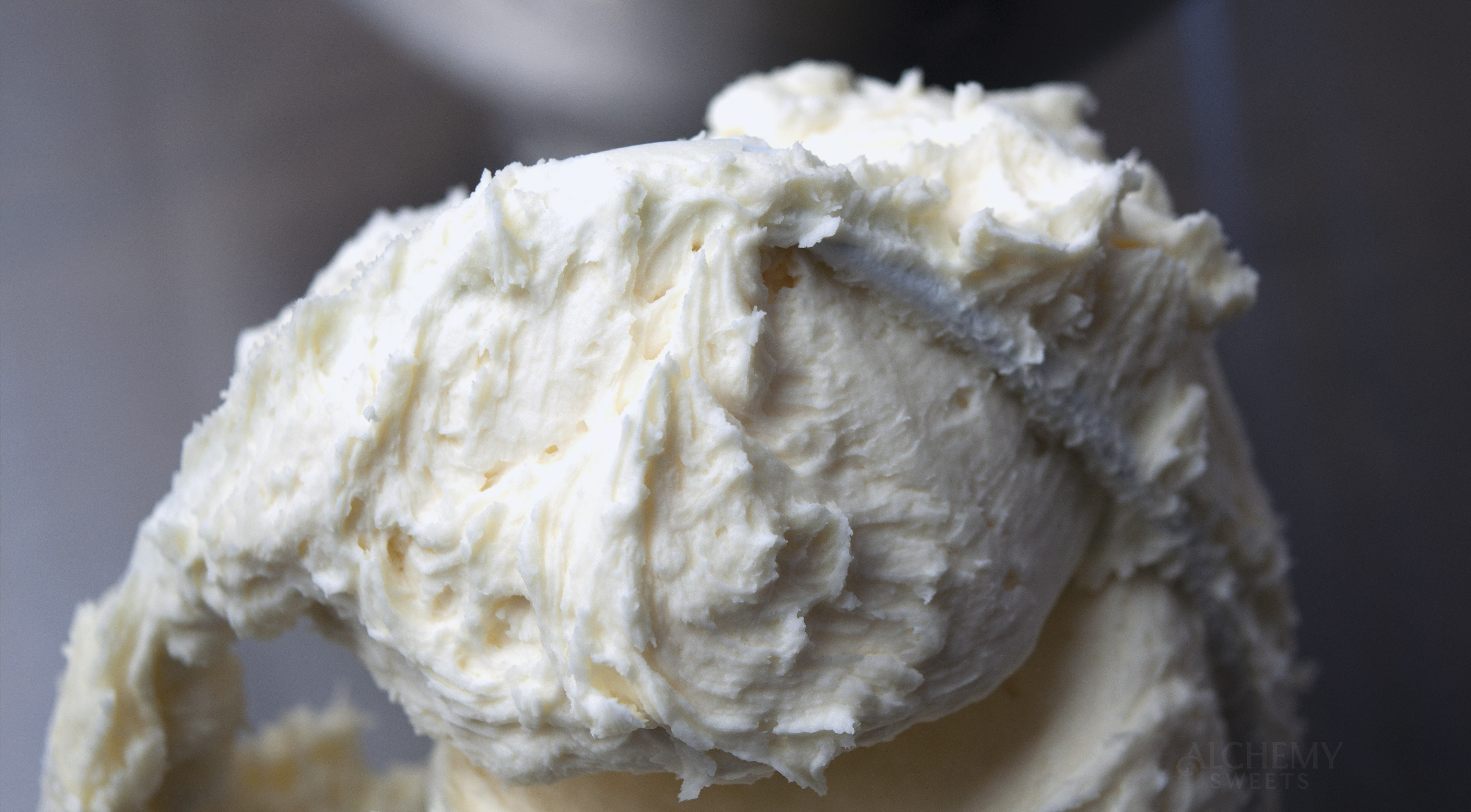
Final consistency should hold stiff peaks and be smooth and pipeable.
TROUBLESHOOTING
Common Issues & How to Fix Them:
Too soft? Your butter might have been too warm, or you didn’t add enough powdered sugar. Add more powdered sugar 1/4 cup at a time, or pop the bowl in the fridge for 10-15 minutes to firm it up.
Pro tip: I sometimes keep an ice pack next to me, to either cool my hand down while piping, or to rest the piping bag on momentarily.
Too stiff or thick? Add hot water, heavy cream or milk 1 teaspoon at a time until you reach the right consistency. You want it firm, but not so stiff that your hand cramps while piping.

Grainy texture? This usually means the powdered sugar wasn’t fully incorporated. Beat the buttercream on medium speed for 3-5 minutes until it’s completely smooth. Using sifted powdered sugar can also help.
Won’t hold its shape? Check your butter temperature—it should be a cool room temp, not warm. If the buttercream feels greasy or slick, it’s too warm. Chill it for 10 minutes and try again.
Crusting too fast? If you’re working in a warm, dry environment, the buttercream can form a crust quickly. Keep unused portions covered while you work.
STORAGE TIPS
Room temperature: Buttercream can sit at room temperature for 1-2 days if your kitchen isn’t too warm. Keep it covered with plastic wrap pressed directly against the surface to prevent crusting, or keep in an airtight container.
Refrigerated: Store in an airtight container for up to 2 weeks. Before using, let it come to room temperature (this can take 2-3 hours), then re-whip it on low speed to restore the smooth texture.
Frozen: You can freeze buttercream for up to 3 months. Thaw overnight in the fridge, bring to room temp, and re-whip before using.
If you’ve already colored your buttercream, store each color separately in small containers, or in plastic wrap. Gel colors can intensify slightly after sitting, so keep that in mind when mixing shades.
Ready to start piping?
Check out these flower tutorials to put this buttercream to use:
- Learn to Pipe Buttercream Flowers; hydrangea, rose and rosettes
- Learn to Pipe Buttercream Daisies
- How to Pipe Blooming Sunflowers
New to coloring buttercream? Download my FREE Color Mixing Cheat Sheet with 9 gorgeous floral shade formulas using just 5 basic gel colors – perfect for piping beautiful flowers!
Happy decorating! 🙂

Easy Buttercream Recipe for Flower Piping
Equipment
- kitchen scale
- measuring spoons
- kitchenaid stand mixer
- spatula
Ingredients
- 500 g butter *
- 1 kg powdered sugar
- 1-2 tsp hot water *
- 2-3 tsp vanilla extract or flavoring of choice
Instructions
- Let butter sit out at room temperature for at least 1 hour
- Cut butter into smaller pieces and put into mixing bowl, or stand mixer

- Beat butter until smooth and starts to stick to the side of the bowl *500 g butter *
- Gradually add icing sugar *1 kg powdered sugar

- Beat butter and icing sugar on medium until combined

- Add flavoring2-3 tsp vanilla extract or flavoring of choice

- Add 1 tsp of hot water, add more until you reach a medium consistency1-2 tsp hot water *

- Turn speed down to low on mixer and mix for 5 minutes
Notes
- You can use unsalted butter or salted – or do half and half. It all depends on how sweet you want the final buttercream to taste. I find salted butter can even out the sweetness of the sugar. But if you want to control the amount of salt added, use unsalted and add 1 tsp of salt.
- Sifting the icing sugar isn’t 100% necessary, you can ultimately achieve the same buttercream without doing so. Sometimes I sift, sometimes I don’t…just depends how I feel that day. Do what works for you.
- The amount of water and/or butter added will be dependent on your environment. Dryer and cooler environments may need more. The buttercream should be smooth but firm enough to hold it’s shape, but not too firm that it is hard to pipe. Aim for a medium consistency!
- Mixing the buttercream on low for a few minutes after everything is incorporated can help eliminate some air that was introduced during the initial mixing process.
Post updated December 4, 2025