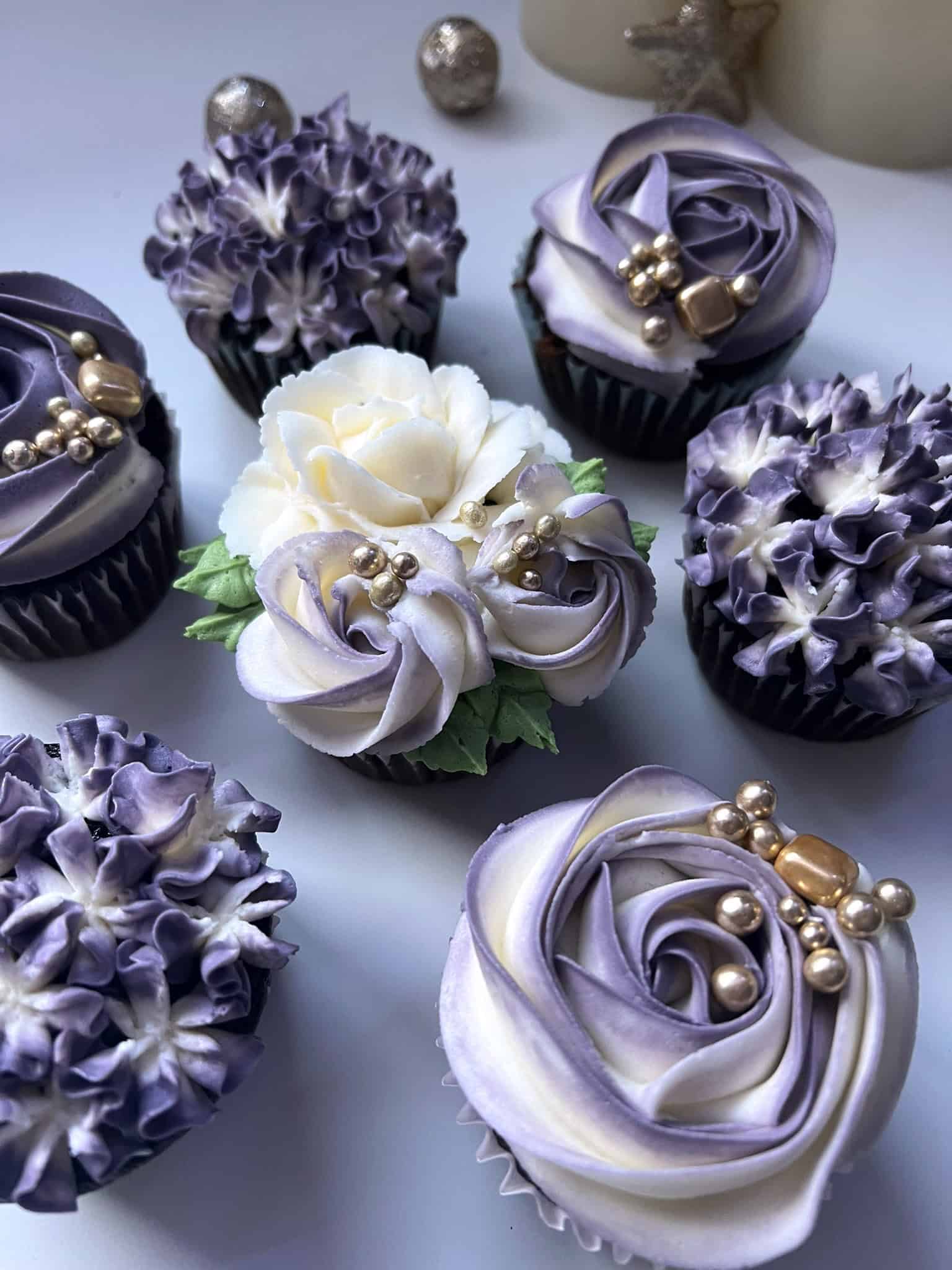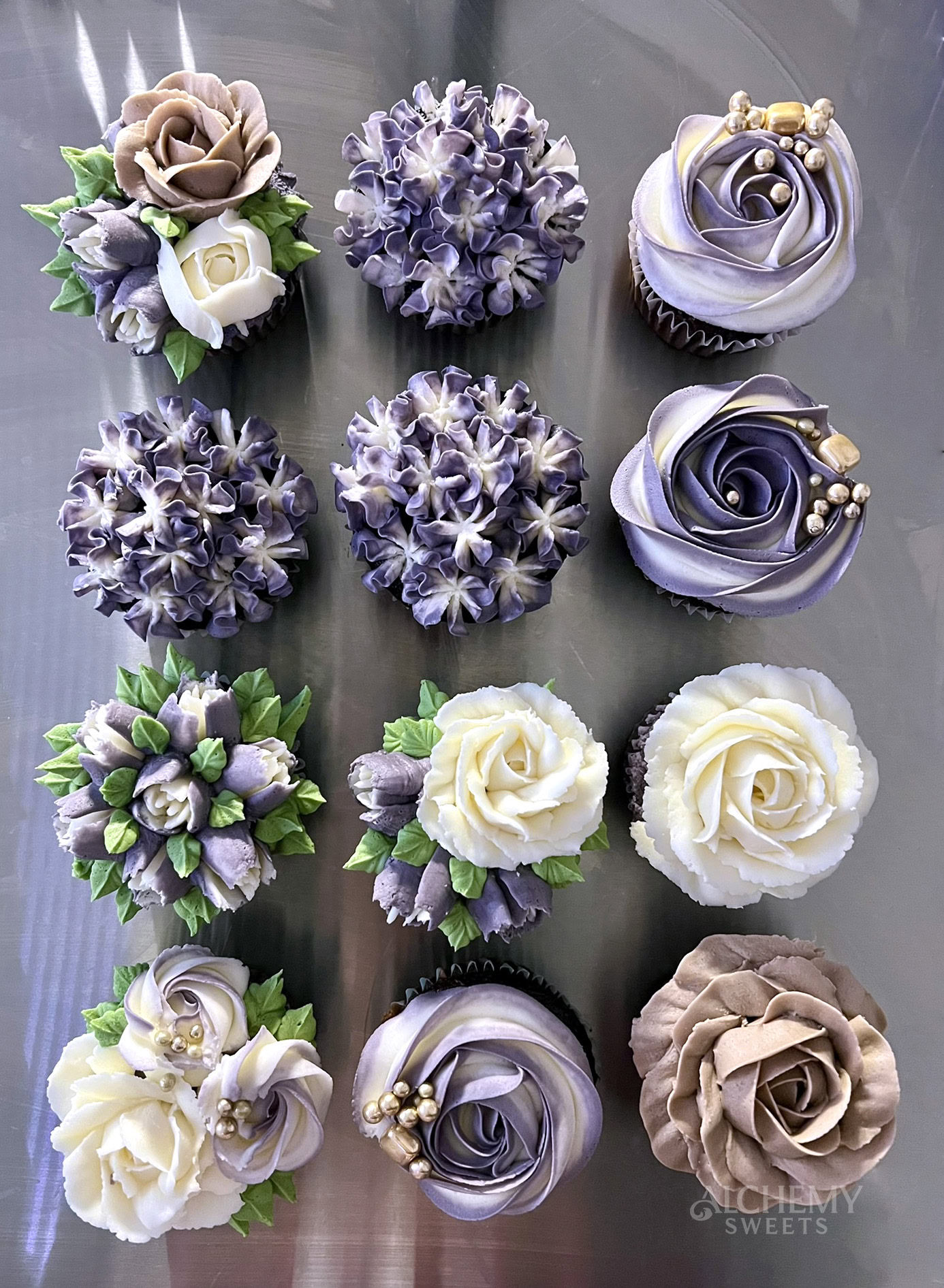
I don’t even remember the first buttercream flower I piped, or what it looked like.
What I do remember is wrestling with buttercream consistency, it being too soft, too stiff or colors going muddy and my piping hand cramping up before a flower even had a chance to come together.
But somewhere along the way, after years of piping and completely immersing myself in a world of flowers, things started to make sense and suddenly my hands just knew what to do. The movement, the pressure, the way each petal builds on the next, it all became a lot more intuitive.
After piping 35+ different flowers as part of my 100+ Buttercream Flower Challenge, I can tell you this: the learning curve is much gentler than it looks.
This page is where I keep every buttercream flower tutorial on the blog, along with the buttercream recipes and tools you need before you start piping. Think of it as your starting point, whether you’re brand new or refining your technique.
And if you’re just beginning, on quick tip: you don’t need to use your “good” butter to practice. I keep a simple margarine-based version on hand that piped and holds it’s shape similarly to the real thing, it’s what I use anytime I’m warming up or trying something new.
Jump To
Start Here If You’re New
Buttercream flowers have a reputation for being difficult. In my experience, that reputation often comes from a few early attempts with the wrong consistency buttercream, or trying to pipe without the right set up. Once those two things are sorted, the learning curve drops significantly.
You don’t need a large tool kit to get started. Most of the flowers below use the same tips (104 petal tip), a flower nail, and parchment squares. A few use specialty tips, but every tutorial on this blog includes a full tools list so you know exactly what you need before you begin.
If you’re wondering where to start, the rosette is usually the easiest first flower. It teaches pressure control, which carries into almost everything else. The hydrangea is another beginner-friendly options because it’s build from repetition, small imperfections just read as texture.
From there, it becomes more about interest than order.
This Wilton Piping Tip Set and Russian Piping Tip Set are everything you’ll need to get started with all the piping tutorials linked below.
Before You Pipe: Let’s Talk Buttercream
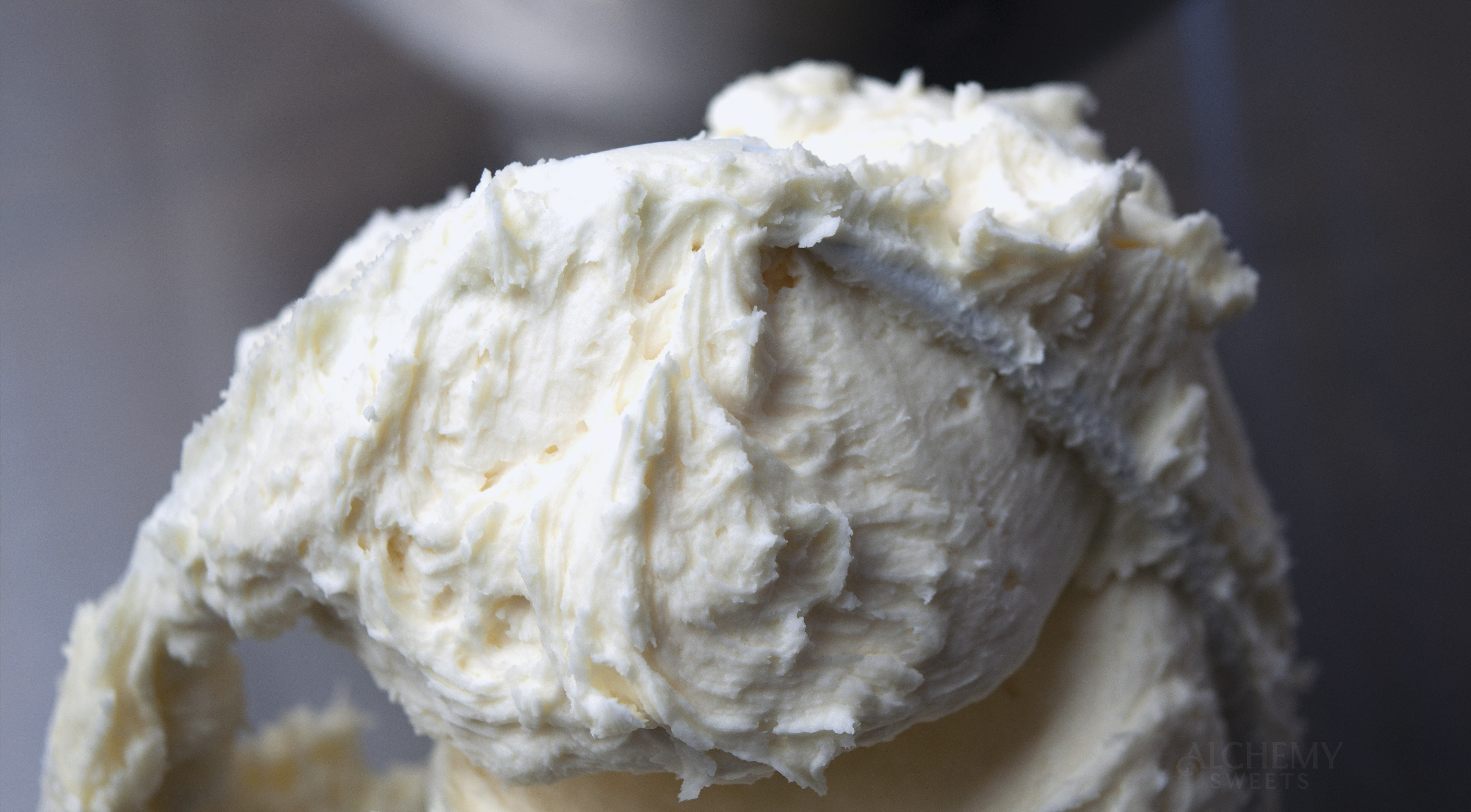
The buttercream you use matters more than most beginners expect. When flowers collapse, lose definition, or look stringy, it’s usually a consistency issues, not a piping skill issue.
Here are the three buttercream I use and recommend:
American buttercream – Simple to make, very stable, and easy to color. It can crust slightly as it sits, which helps the flower hold its shape once piped. It’s a solid starting point for cupcakes and flowers.→ Full recipe here
Faux Swiss meringue buttercream – This is what I use for cake icing and detailed flowers. It uses meringue powder instead of cooked egg whites. It still gives you the smooth texture and stability of Swiss meringue without the extra steps. → Full faux Swiss recipe here
Practice buttercream – A margarine-based buttercream that pipes and holds shape like the real thing, at a fraction of the cost. Ideal for learning and warming up. → Practice Buttercream Recipe
If you’re starting out, begin here. Removing the pressure of “wasting” expensive ingredients makes it much easier to focus on building muscle memory (and hand strength!)

How to Use a Flower Nail
If you’ve been piping directly onto cupcakes or a cake board, switching to a flower nail will make an immediate difference.
Here’s how to set it up:
- Add a tiny dot of buttercream to the flat head of the nail.
- Press a small square of parchment on top to anchor it so it doesn’t slide while you pipe.
- Hold the nail between your thumb and index finger.
- As you pipe, rotate the nail slowly counter or clock-wise.
The rotation is what helps create even, well-shaped petals. It takes a few tries to find your rhythm, but once it clicks, it becomes second nature.
Easy Buttercream Flowers to Start With
If you’re just getting started, these flowers are a good place to begin. Some are simple because the technique is forgiving, other because the piping tip does most of the work.
- Rosette (2D tip): one of the easiest starting points. Great for cupcakes and learning pressure control.
- Hydrangea (2D tip): very beginner-friendly drop flower cluster, piped in two tones for added variation and texture.
- Tulip (Russian piping tip): bold shape with minimal precision required, more of a pressure and consistency practice.
- Cherry Blossom (103 tip): soft, delicate, great for spring-style cakes and cupcakes.
- Daisy (104 tip): simple, clean petals, very beginner-safe.
- Sunflower (352 tip): slightly more advanced but very forgiving in shape and great for practicing repetition.
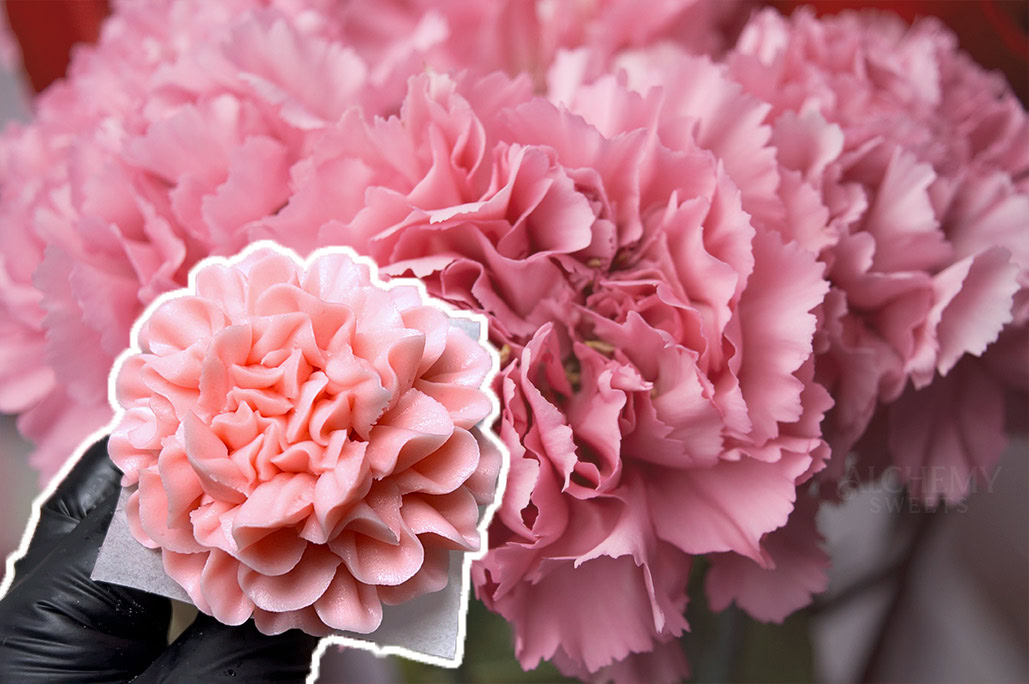
- Carnation (104 tip): layered texture, great for learning ruffles.
- Rose (104 tip): classic flower, takes patience but foundational skill-builder.
Buttercream Flower Tutorials & Techniques
Rosette
Tip: 2D or 1M
Beginner | Great for learning pressure control
The rosette is the most useful first flower to learn. One continuous swirl from the center outward, and you have something that looks finished and intentional on a cupcake. It’s also the best way to start feeling what even, consistent pressure actually means before you try anything more complex.
→ How to pipe a buttercream rosette

Hydrangea
Tip 2D
Easy | Very forgiving
Hydrangeas are made up of small four-petal clusters piped close together across the surface of a cupcake or cake. The 2D tip does a lot of the work, and because the design is built from repetition, small inconsistencies between individual clusters just read as texture. A full cake covered in hydrangeas is one of the most achievable “impressive-looking” designs for a beginner.
→ How to pipe a buttercream hydrangeas

Tulip
Russian Piping Tip
Easy | Instantly recognizable
Russian piping tips are worth mentioning early because they’re genuinely beginner-friendly despite looking complex. A single press pipes the entire flower, no petal-by-petal work. Tulips are a great starting point with Russian tips because the shape is forgiving and the result is bold and spring-ready.
→ How to pipe buttercream tulips with Russian piping tips

Cherry Blossom
Tip 103 or 104
Easy | Beautiful for spring designs
Cherry blossoms are one of the most delicate-looking flowers you can pipe, but the technique is simpler than it appears. Each blossom uses five small petals fanned around a center, the petal tip does most of the shaping. They work beautifully clustered on branches or scattered across a spring cake.
→ How to pipe buttercream cherry blossoms

Daisy
Tip 104 + 10 + 2
Easy | Perfect for wildflower and garden designs
The 104 petal tip is one of the most versatile in your kit, and daisies are a great way to learn how to use it. Even petals, a simple centre, and you have a flower that fits naturally into wildflower arrangements, spring designs, and garden-style cakes.
→ How to pipe buttercream daisies

Sunflower
Tips 104 + 18
Easy–Intermediate | A real statement flower
Sunflowers use the 104 tip for the outer petals and a star tip for the textured centre. They’re a little more involved than the flowers above, but still very achievable and deeply satisfying to pipe. A few sunflowers on a cupcake arrangement immediately look like summer.
→ How to pipe buttercream sunflowers

Carnation
Tip 104
Intermediate | Rich texture, worth the practice
Carnations are built from layered ruffled petals, all piped close together working inward toward the centre. They take a little patience but the result is a full, textured flower that holds beautifully in arrangements. Once you’re comfortable with the basic petal motion, carnations are a natural next step.
→ How to pipe buttercream carnations

Rose
Tip 104 or 124
Intermediate | A classic for a reason
The rose is one of the most iconic buttercream flowers and one of the most worth learning properly. It takes the most practice of the flowers on this list, but the payoff is significant. Start with a base cone of buttercream, then work petal by petal outward. Give it time, and it will come.
→ How to pipe a buttercream rose
Check out my piping tip comparison for piping roses.

How to Transfer Buttercream Flowers to a Cake
Once you’ve piped your flowers on parchment squares, transferring them onto a cupcake or cake surface is quite easy.
Parchment method (most common):
- Pipe your flower on a parchment square on the nail.
- Slide the square off the nail onto a flat tray or sheet pan.
- Chill in the fridge for 15–20 minutes, or the freezer for 5–10 minutes.
- Once firm, slide a small offset spatula or scissors under the flower and gently lift it onto your cake or cupcake.
Tips for a clean transfer:
- Always chill flowers before moving them, it makes them much easier to handle and keep their shape intact.
- Work quickly once they come out of the fridge; they may soften fast at room temperature depending how warm of a space you’re working in.
- Pipe a dollop of buttercream where you want the flower to go, and press gently but firmly into soft buttercream dollop so they sit naturally rather than perching on top.
How to Practice With Less Cost
One of the biggest barrier when learning buttercream flowers is feeling like you’re wasting ingredients (I know I did). A few things help reduce that pressure:
Use practice buttercream. My margarine-based practice recipe costs a fraction of regular buttercream, pipes the same way, and can be scraped off parchment and reused several times in one session.
Use wax paper instead of parchment. Parchment absorbs fat from the buttercream overtime, but wax paper wipes clean and holds up for multiple rounds. Or skip the paper entirely and pipe directly on the flower nail.
Practice on dummy cupcakes. Styrofoam cupcake dummies let you pipe directly onto something that looks and feels like the real thing, without using up actual baked goods. Pro tip: press the stem of your flower nail into the bottom of the dummy cupcake to keep it stable while you pipe.
Freeze your leftover buttercream. Buttercream freezes well and just needs a quick whip once thawed, so nothing goes to waste between practice sessions.
Common Beginner Mistakes
These are the most common issues when starting out, nearly all of them come down to consistency or pressure control.
Buttercream too soft. Flowers collapse or lose their shape right after piping. → Chill your buttercream for 10–15 minutes before using, or add powdered sugar a tablespoon at a time until it holds its shape. On warm days, you may need to work in shorter sessions and return the bag to the fridge periodically.
Overfilling the piping bag. Hard to control pressure, and buttercream squeezes out the back. → Fill the bag about halfway. It feels like you’ll run out faster, but the control improvement is immediate. And you don’t typically need as much as you think you do.
Holding the tip too far from the nail. Petals look thin, wonky, or lack structure → Keep the tip close to the surface as you start each petal, some are almost touching. You want each petal to have defined contact.
Not rotating the nail smoothly. Petals end up uneven, or clustered on one side. → Practice the rotation without any buttercream first, just the nail in hand, turning it slowly and evenly to build muscle memory.
Rushing between petals. The flower looks jumbled and petals are uneven in weight → Slow down. Each petal should be deliberate. Speed comes naturally with repetition; accuracy has to come first.
What to Try Next
Once you’re comfortable with the basics, here are a few helpful next steps:
Free Buttercream Color Mixing Guide – A 9-color mixing reference, free when you join the Alchemy Sweets newsletter.
How to Make Red Buttercream – Getting true red is one of the trickier color challenges in buttercream. This is how to do it.
Pipeable Cream Cheese Buttercream – A softer, tangy, floral-friendly alternative that works great on spring and summer cupcakes.
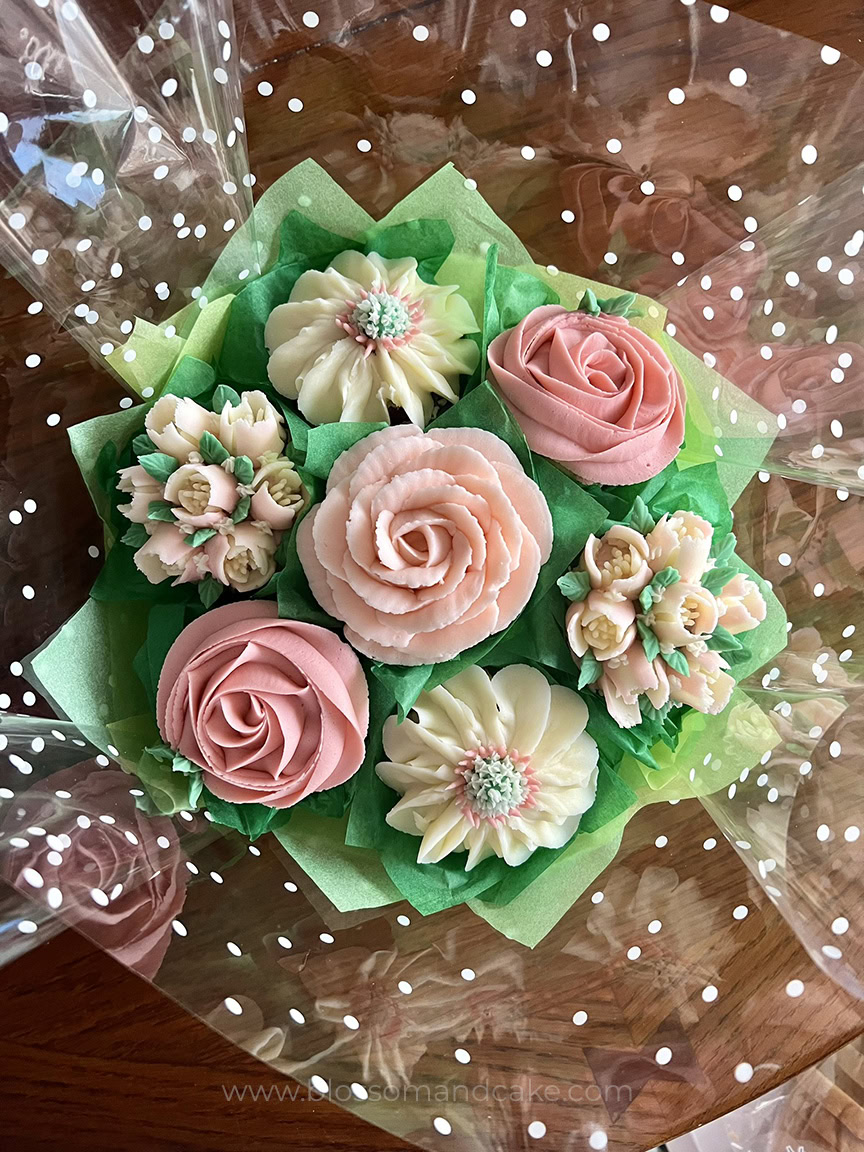
How to Make a Cupcake Bouquet – A simple way to arrange your piped flower cupcakes into a finished piece.
A Few Last Words
You’ll pipe flowers that don’t look right, or the way you expect but that’s part of it. Most “mistakes” come down to consistency, pressure or even temperature and those are things are start to recognize and problem solve with repetition.
Start simple, repeat often, and don’t overthink the early stages. Even practice sessions that feel messy are building control and muscle memory in the background.
The flowers will come.
What flower are you planning to try first?