This sponge cupcake recipe comes from my late grandmother’s recipe book, a collection she left behind that I’ve been slowly working through and recreating. We lived far apart and didn’t get many chances to be together, so I never actually got to taste her baking. But she made wedding cakes on the side, and knowing that, I feel like we share more than I realized. Bringing her recipes to life through Alchemy Sweets is my way of getting to know that part of her.
What strikes me every time I bake from her book is how much the recipes assume you already know. There are no notes explaining why things work, no troubleshooting tips, no reminders about room temperature ingredients. She just wrote down what to do. Bakers of her era learned by doing, by standing next to someone who already knew, and those gaps in the instructions are part of what makes recreating these recipes feel like a conversation across time.
I’ve tested it enough times now to know it’s earned its place in the book. The cupcake is light and airy with a gentle chew, and the lemon is subtle, more of a refreshing lift than anything overpowering. I’ve filled in the blanks as best I can so you get the version she would have explained if you’d been standing in her kitchen with her.
JUMP TO
Why This Sponge Cupcake Recipe Works
A lot of cupcakes rely on butter or oil for moisture and structure, but this sponge cupcake recipe takes a completely different approach, and once you understand why, it makes total sense.
Whipping the egg whites to stiff peaks builds a foam that acts as the backbone of the batter. That foam traps air, which expands in the oven and gives the cupcakes their lift. The yolks, cold water, and a touch of lemon bring just enough richness and moisture to keep them from drying out.
The result is a cupcake that is genuinely light, not in a dry or insubstantial way, but airy and tender in a way that butter-based cupcakes simply can’t achieve. And because there’s no heavy fat weighing them down, they pair nicely with a rich frosting without ever feeling too much. Being a true sponge, it also soaks up syrups and fillings beautifully, something to keep in mind when thinking about how to dress it up.
This recipe was originally written for a cake baked in a tube pan. The hollow center helps conduct heat evenly through the batter so it bakes all the way through without drying out the edges. I’ve made it as cupcakes here, but the technique is identical either way, just adjust your bake time accordingly.

Tools & Equipment
- Stand Mixer or hand mixer (I used a hand mixer for this recipe)
- Mixing bowls
- Measuring cups and spoons
- Zester
- Sifter
- Spatula
- 12-cup muffin pan
- Cupcake liners
Ingredients
Eggs, separated: the secret to this cupcake’s light, airy texture. The yolks add a little richness while the whipped whites give the lift that replaces fat entirely. Make sure your bowl is completely clean and grease-free before whipping, any trace of fat will prevent them from reaching full volume.
Sugar: sweetens and also helps stabilize the whipped egg whites when added gradually.
Flour, sifted: sifted flour folds in more easily without deflating the batter, which is especially important here since those whipped whites are doing all the work.
Salt: just enough to balance the sweetness and brighten the lemon flavor.
Cold water: helps keep the batter light and the crumb tender.
Lemon zest: this is where most of the lemon flavor comes from. Fresh zest adds a brightness that extract alone can’t quite replicate, so don’t skip it if you can help it.
Lemon juice or extract: adds a little extra lemony fresh taste. Fresh juice works beautifully here, or substitute extract for a more concentrated flavor.
Baking powder: gives a little extra lift alongside the whipped egg whites.

Instructions
Before you get started, preheat your oven to 325°F so it’s ready to go by the time your batter is.
Step 1: Separate your eggs. Before you start, make sure all your bowls and beaters are completely clean and grease-free as even a trace of fat may prevent the whites from whipping later. Separate each egg carefully, keeping the whites in one bowl and the yolks in another.
Note: If you’re not confident separating eggs, separate each egg into a small cup first before adding to the bowls, so one broken yolk in the egg whites doesn’t ruin what you already separated.

Step 2: Beat the egg yolks. In your large bowl, beat the egg yolks until thick and pale. They should ribbon off the beater and hold their shape briefly before settling back in.

Step 3: Add the sugar to the yolk bowl. With the mixer running, gradually beat the sugar into the yolk mixture until fully incorporated and smooth.

Step 4: Add the cold water and lemon. Add the cold water, lemon zest, and lemon juice to the yolk mixture and mix to combine. The cold water keeps the batter light and tender.

Step 5: Fold in the flour. Sift the flour and salt directly into the yolk mixture and fold gently until just incorporated. Set this bowl aside

Step 6: Whip the egg whites and add baking powder. Using clean beaters, whip the egg whites in their bowl until foamy (about 1-2 minutes) then add baking powder.

Step 7: Whip to stiff peaks. After adding the baking powder to the whites, continue whipping until stiff peaks form (about 5-7 minutes). When you lift the beater the whites should hold a firm peak without drooping.

Step 8: Fold the whites into the yolk mixture. Add the whipped whites to the yolk mixture in two or three additions, folding gently each time. Use a wide spatula and a light hand, you want to keep as much air in the batter as possible. A few white streaks are fine; do not overmix.


Step 9: Fill the liners and bake. Divide the batter evenly into your cupcake liners and bake at 325°F for 18 to 20 minutes. Resist opening the oven early. When done, they should be golden and matte on top. Let cool completely before decorating.

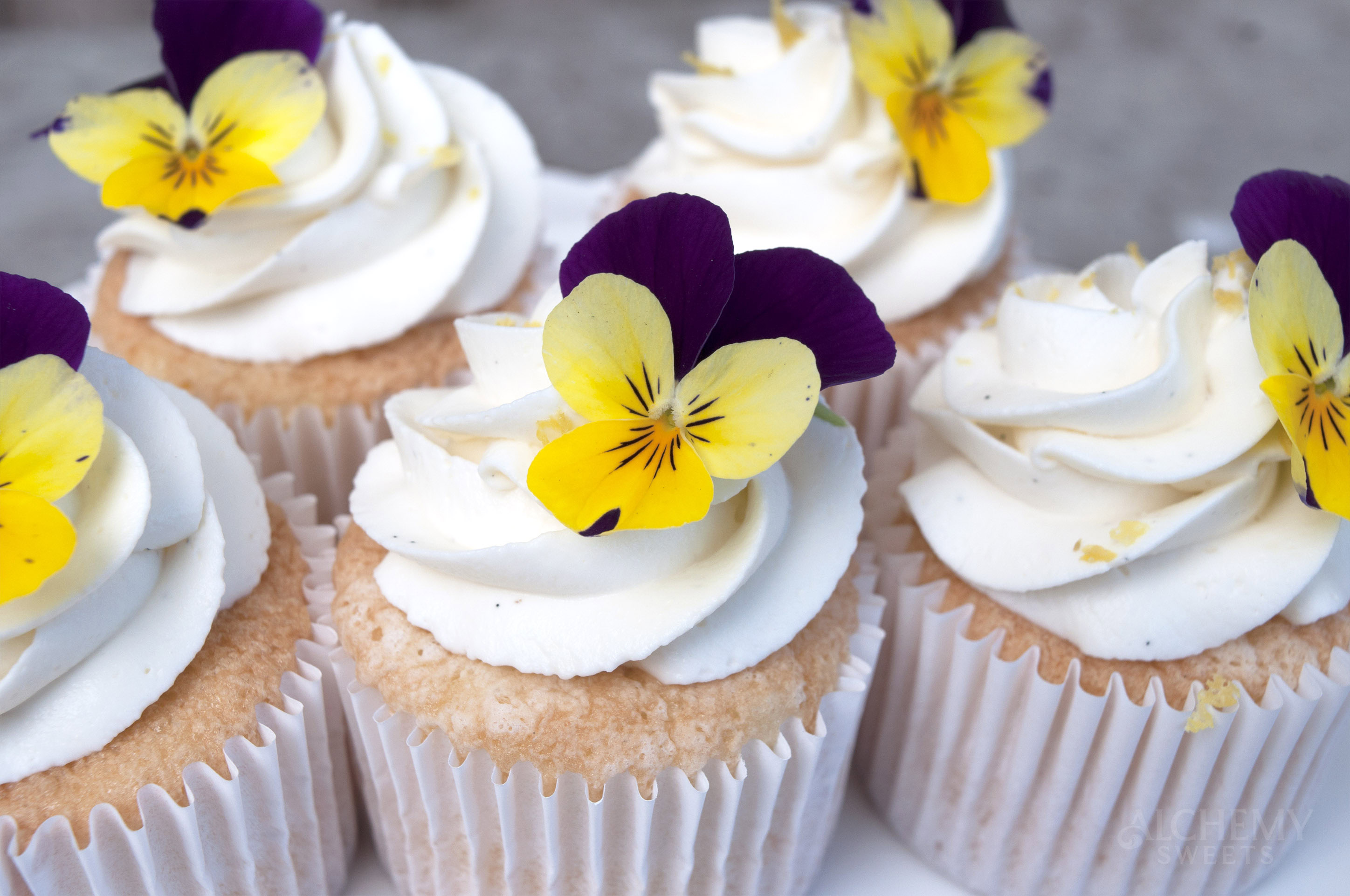
Step 10: Frost and decorate. Once completely cooled, frost your cupcakes and decorate as you like. For these I used a mascarpone Chantilly (recipe coming soon) with a little of the lemon zest left over from the batter, and fresh pansies picked straight from the garden. Simple and just right for summer.

Cupcake Troubleshooting
The egg whites won’t whip up properly. The most common culprit is fat. Any trace of egg yolk, grease on the bowl, or residue from a previous use will prevent the whites from whipping to stiff peaks. Wash your bowl and beaters in hot soapy water and dry them thoroughly before you start. If you crack an egg and a bit of yolk gets through, fish it out with a piece of shell or start fresh with a new egg rather than trying to mix it in.
The cupcakes sank in the middle. This usually means the oven was opened too early, or the cupcakes were underbaked. The egg white foam needs heat to set before it can support itself. Wait until the minimum bake time has passed and the tops look set and lightly golden before checking. A toothpick inserted in the center should come out clean or with just a few dry crumbs.
The texture feels dry or rubbery. Overmixing after the flour goes in is the most likely cause. Once you start folding, stop as soon as the flour is incorporated. The same applies when folding in the egg whites: stop while there are still a few pale streaks. Continuing past that point deflates the batter and tightens the crumb.
The cupcakes didn’t rise much. Check that your baking powder is still active. Drop a teaspoon into hot water and it should bubble immediately. Old baking powder loses its lift. Also make sure the egg whites were whipped all the way to stiff peaks, not just soft peaks, before folding in.
Storage These cupcakes dry out faster than a butter-based recipe because there’s no fat in the batter. Best eaten the same day, but will keep in an airtight container for up to two days.
Frosting & Filling Pairings
Because this sponge cupcake is light and delicate, it pairs best with frostings that don’t overwhelm it. I topped mine with a mascarpone Chantilly, a stable whipped cream that’s pipeable and doesn’t compete with the tender crumb. A simple vanilla glaze or your favorite light buttercream would work equally well.
For a richer option, my faux Swiss meringue buttercream goes well with the light, airy cake.
Lemon curd would make a great filling if you want to bump up the citrus further. A small amount piped into the center of the cupcake, then sealed with frosting over the top is a simple way to add another layer of flavor.

Frequently Asked Questions
Is it normal for my sponge to look wrinkled as it cools? Yes, from my experience, this is completely normal. Because this sponge cupcake gets its structure entirely from whipped egg whites rather than fat, it will deflate and wrinkle slightly as it cools. It’s not a sign anything went wrong. The texture inside will still be light and tender, the outside just doesn’t hold its puffed shape the way a butter-based cake does once it comes out of the oven.
Why do these cupcakes stick to the liner more than usual? Because there’s no fat in this batter, it’s more likely to stick to the liner than a butter-based cupcake. This is normal for a fat-free sponge. Let them cool completely before peeling, trying to remove the liner while still warm will make it worse.
Can I make this as a layer cake instead of cupcakes? Yes. This recipe was originally written as a cake, my grandmother baked it in a tube pan at 325°F for 50 to 60 minutes. Since the batter makes 24 to 36 cupcakes depending on how full you fill your tins, it’s a generous batch that suits a tube pan well. I haven’t tested the cake version myself yet so check with a toothpick from the 50 minute mark and go from there. Just pair it with a light frosting rather than a heavy buttercream.
Can I use this for a wedding or tiered cake? This recipe is not the right choice for a structural tiered cake. Without fat, it has a more delicate crumb that doesn’t hold up well under the weight of stacked tiers or heavy fondant. For a single-tier celebration cake or a smaller display cake that won’t need dowels and support, it’s a lovely option. For anything tiered, a butter-based sponge will give you more stability.

Grandma’s Classic Sponge Cupcake Recipe
Equipment
- stand or hand mixer
- Mixing Bowls
- Measuring cups and spoons
- zester
- spatula
- 12-cup muffin pan
- cupcake liners
Ingredients
- 6 eggs separated
- 1 ½ cups sugar
- 1 tsp lemon rind/zest from 1-2 lemons
- 1 tsp lemon juice/extract
- 6 tbsp cold water
- 1 ½ cups flour sifted
- ½ tsp salt
- 1 ½ tsp baking powder
Instructions
- Preheat oven to 325℉
- Separate eggs into two grease-free bowls, ensuring no yolk gets mixed in with the whites. Note: put yolks in bigger bowl.6 eggs

- Beat egg yolks until thick and pale. They will ribbon off beaters when done.

- Gradually beat in sugar until combined.1 ½ cups sugar

- Add cold water, lemon zest, and lemon juice, mix to combine.6 tbsp cold water, 1 tsp lemon rind/zest, 1 tsp lemon juice/extract

- Sift flour and salt together, fold gently into yolk mixture until just combined. Set aside.1 ½ cups flour, ½ tsp salt

- In the second bowl, whip egg whites until foamy, then add baking powder.1 ½ tsp baking powder

- Whip egg whites until stiff peaks, approx. 5-7 minutes.

- Fold egg whites into yolk mixture in two to three additions, gently. Do not overmix! A few white streaks is ok.

- Divide into cupcake liners and bake at 325℉ for 18-20 minutes.