*post updated September 2026
Two-tone buttercream is one of my favorite ways to add extra color and dimension to piped flowers.
The technique is much simpler than it looks: by placing two colors of buttercream in the same piping bag, you can create flowers with contrasting petals, subtle gradients, colored edges, or completely different color patterns depending on how you load the bag.
In this guide, I’ll show you how to make a two-tone piping bag and share several ways I use the technique for buttercream flowers, including rosettes, hydrangeas, Russian-tip tulips, and roses. I’ll also show you a slightly different method for creating a two-tone peony by switching colors as you pipe.
You don’t need to learn how to pipe every flower from scratch here. Think of this as a technique you can add to the buttercream flowers you already know how to make.
Want to learn the basic flowers first?
For step-by-step tutorials on piping flowers like hydrangeas, rosettes, and roses, check out my Learn to Pipe Buttercream Flowers blog post and real-time buttercream flower piping video on YouTube.
JUMP TO:
What You’ll Need
- Piping Surface:
- Cupcake, cake, parchment paper, or a flower nail (depending on your project).
- Buttercream:
- At least two colors for the two-tone effect.
- Piping Tips:
- Rose: Wilton 104
- Tulip: Russian tip
- Rosette: Wilton 2D or 1M
- Hydrangea: Wilton 2D
- Peony: Wilton 123
- Piping Bags
- Small Spatula or Butter Knife and spoon:
- To apply and position the colors inside the piping bag.
- Food Coloring
- Optional Tools:
- Flower lifter or small offset spatula to transfer flowers piped on parchment or a flower nail.
- Couplers; for easily switching tips with the same piping bag.
The most important thing is that your two buttercreams have similar consistencies. If one is much softer than the other, the colors may not flow evenly through the piping tip.
How to Prepare a Two-Tone Piping Bag
There are a few different ways to load a piping bag with two colors, but this is one of the easiest methods when you want the colors to come out together.
1. Prepare the piping bag:
Fit your piping bag with the piping tip you’ll be using.
For example, I might use a Wilton 104 for a rose or a 2D for a rosette or hydrangea.
2. Add the outer color:
Take one color of buttercream and use a small spatula or butter knife to spread it along the inside of the piping bag.
Start near the piping tip and work upward, keeping the buttercream concentrated along one side of the bag.
You don’t need to cover the entire inside of the bag. The goal is simply to create a strip of buttercream that will run down toward one side of the piping tip.
3. Add the inner color:
Add your second color of buttercream to the remaining space in the piping bag.
A spoon works well for this. Push the buttercream down toward the tip as you fill the bag, trying to keep the two colors from mixing more than necessary.
4. Close and position buttercream:
Twist the top of the piping bag and gently squeeze the buttercream toward the piping tip.
Before decorating your cake or cupcakes, pipe a small amount onto parchment or another practice surface.
This lets you see how the colors are positioned and whether you need to adjust the bag before you start piping your flowers.
The placement of the colors matters. With some piping tips, putting one color along a particular edge of the bag will make that color appear primarily along one edge of the petals. Changing the placement can completely change the finished flower.
And that’s where two-toning gets fun.
Two-tone Buttercream Flower Ideas
Once you have your piping bag loaded, you can use the same basic technique to create very different effects.
Sometimes you want the colors to blend softly. Other times, you want one color to appear mainly along the edges or on one side of the flower.
Here are a few examples.
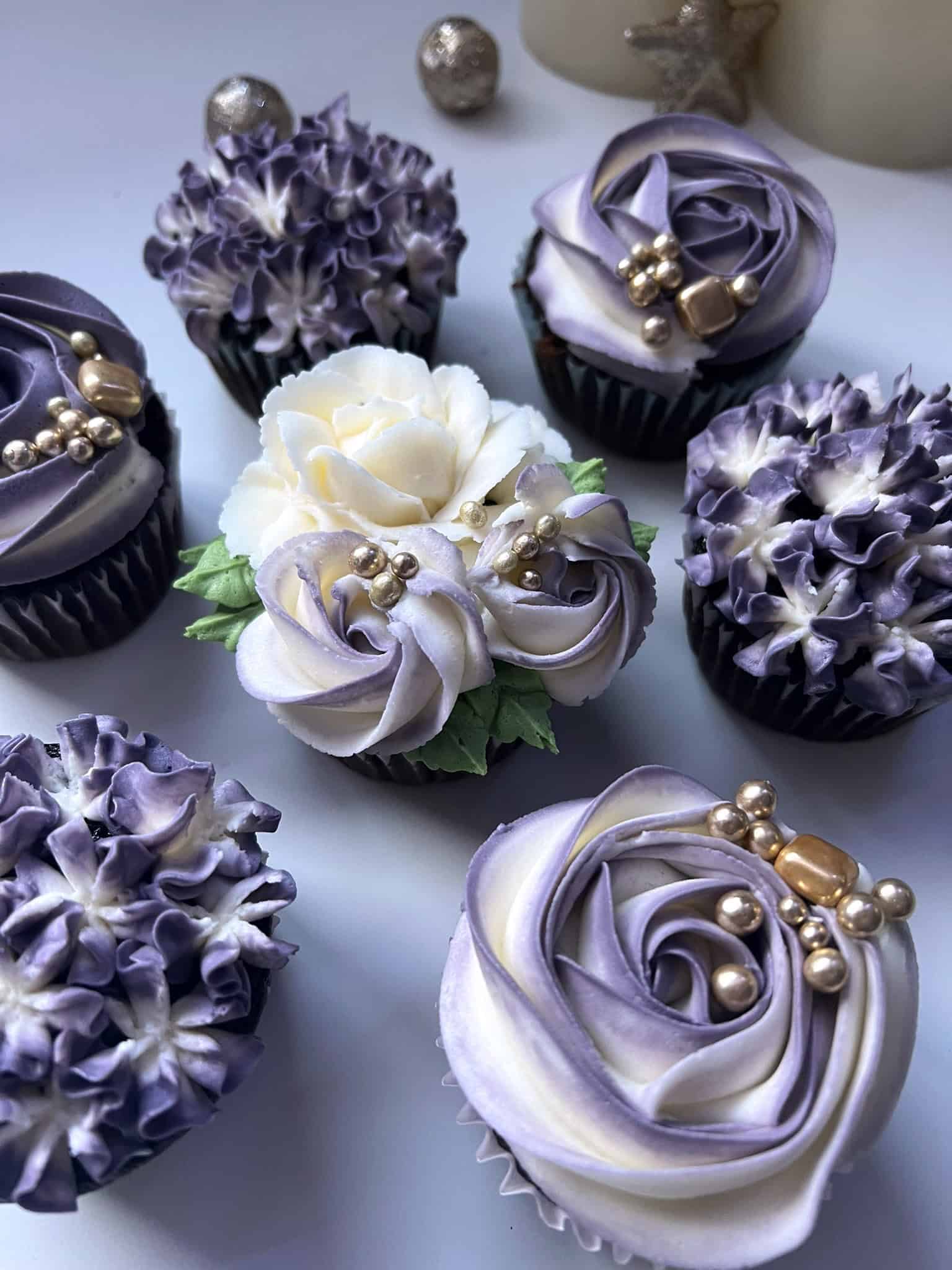
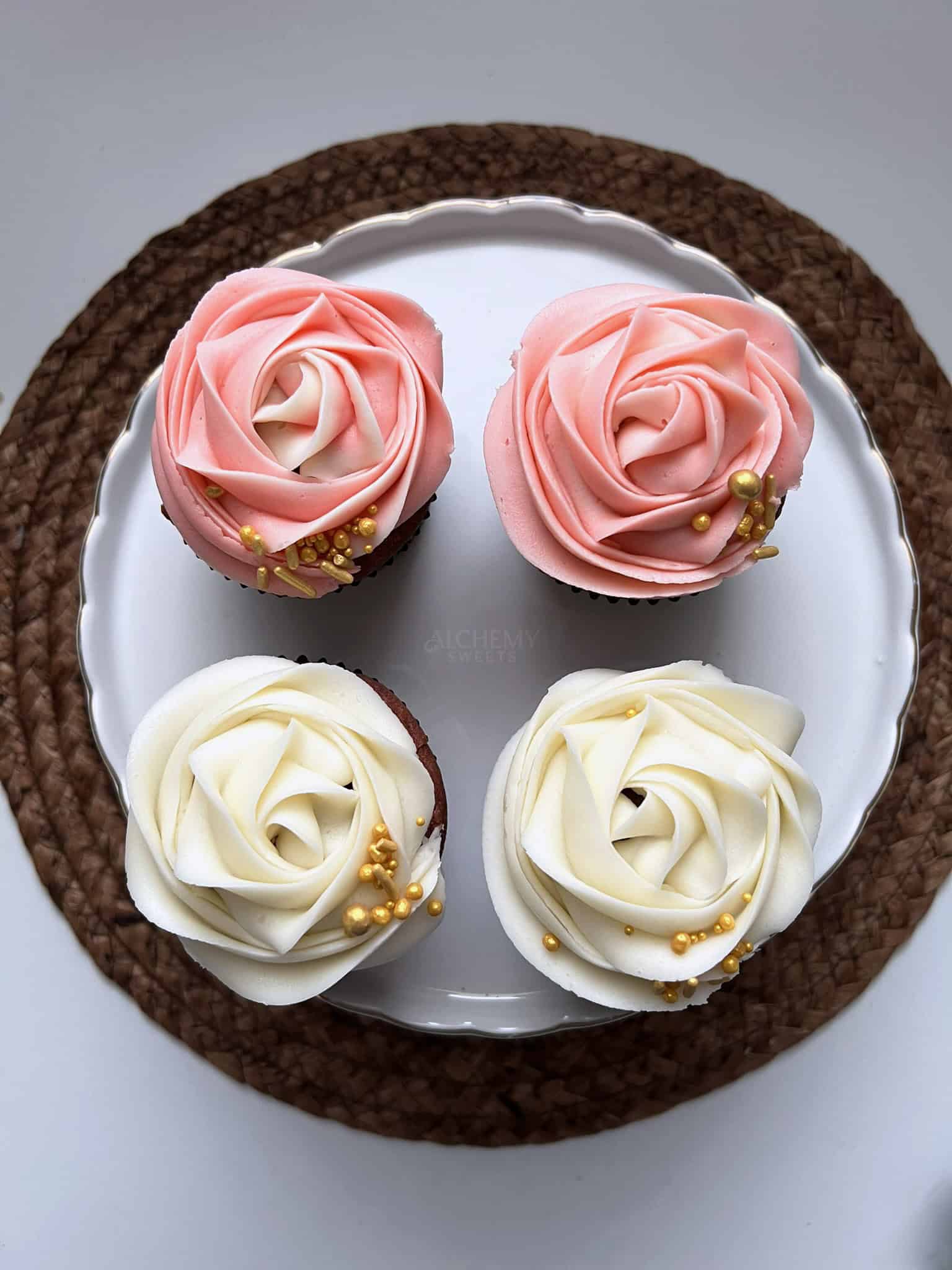
Two-Tone Rosette


Rosettes are one of the easiest places to experiment with two-tone buttercream.
Using a 1M or 2D tip, the two colors naturally work their way through the ridges of the piping tip as you swirl.
You can use colors that are close together for a subtle effect, or choose contrasting colors for something much more noticeable.
I especially like using two shades of the same color when I want the flower to have a softer, more dimensional look.
Try:
- Pink + white
- Lavender + white
- Orange + yellow
- Two shades of the same color
If the colors aren’t showing evenly, adjust how much buttercream you’re putting on each side of the piping bag. You can also experiment with the position of the colors relative to the piping tip.
Tip: Pipe a small test rosette before decorating your cupcakes. It’s much easier to adjust your buttercream placement before you’ve started piping the entire batch.
Two-Tone Hydrangeas


Hydrangeas are another great flower for experimenting with two-tone buttercream.
Because the petals are small and tightly packed, even a subtle color variation can make the finished flower look much more dimensional.
For these flowers, I like pairing colors that blend naturally together, but you can also go much bolder.
Try:
- Soft pink + blue
- Lavender + white
- Purple + white
- Orange + yellow
- Red + orange
If you haven’t piped buttercream hydrangeas before, I have a full beginner step-by-step tutorial here: Learn to Pipe Buttercream Flowers.
The two-tone technique doesn’t change how you pipe the flower itself. You’re simply changing how you load your piping bag before you begin.
Two-Tone Russian-Tip Tulips


Russian piping tips make it possible to create a full flower with a single squeeze, which makes them particularly fun to experiment with using two colors.
Instead of having one solid-colored tulip, you can position the second color so that it appears through the center or along parts of the petals.
The result can be surprisingly different depending on where you place each color in the bag.
For example, these purple and orange tulips have a much stronger contrast than the pale pink and orange version.
The technique is the same; the color placement creates the difference.
Tip: Russian tips work best with buttercream that is firm enough to hold the shape of the petals but still soft enough to release smoothly from the tip.
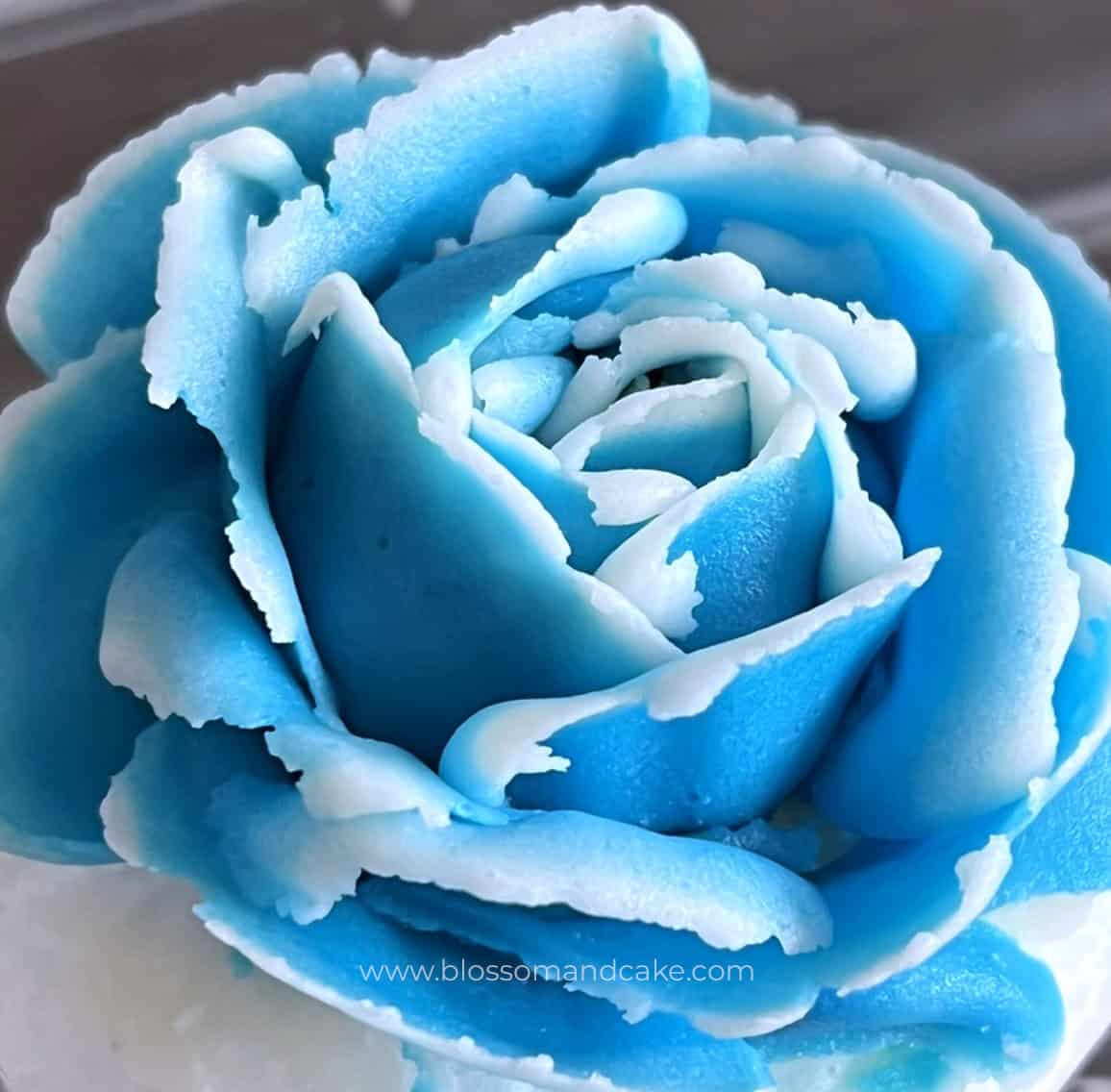
Two-Tone Rose with Colored Edges


One of my favorite two-tone effects is a rose with color concentrated along the edges of the petals.
Instead of dividing the piping bag evenly between two colors, you can apply a narrow strip of colored buttercream along one side of the bag.
When you pipe with a petal tip such as a Wilton 104, that color can appear primarily along the edge of the petals.
This gives you a much more subtle effect than simply dividing the piping bag into two equal colors.
You can use this technique with almost any color combination, but I particularly like using a white or very pale buttercream as the main color with a stronger shade along the edge.
For the full technique for piping a buttercream rose, check out my real-time buttercream flower piping video.
Tip: Pay attention to which side of the piping tip the colored buttercream is sitting against. With a petal tip, the placement of the color determines where it appears on the finished petal.
Troubleshooting Tip: If the edge color on your two-tone rose isn’t showing clearly, make sure the colored buttercream is applied precisely to the seam of the piping bag where it will form the petal edges (the narrow edge of the petal tip.) Use firm buttercream and practice steady pressure while piping to maintain crisp, clean lines.
Switching Buttercream Colors for a Two-Tone Peony
Not every two-tone flower needs to have both colors coming out of the piping tip at the same time.
For this peony, I used a different technique: I piped the center of the flower with one color, then switched to another color for the outer petals.
This creates a more defined color change than the blended effect you get from a two-tone piping bag.

An easy way to switch colors
I like using plastic wrap to make buttercream “logs.”
- Spread each buttercream color onto a separate piece of plastic wrap.
- Roll the plastic wrap around the buttercream to create a long log.
- Twist the ends closed.
- Place the first buttercream log into your piping bag fitted with your piping tip.
- Pipe the first part of the flower.
- Remove the first buttercream log and replace it with the second color.
For my peony, I used pink for the center petals and natural-colored buttercream for the outer petals.
You can use two completely different colors for a bold transition, or use several shades to create a more gradual change.
Tip: After switching colors, pipe a small amount of buttercream onto your practice surface first. This clears out the remaining buttercream from the previous color so your new color comes through cleanly.
Tips for Better Two-Tone Buttercream Flowers
Two-toning is pretty forgiving, but a few things make a big difference.
Keep your buttercream consistencies similar: If one color is much softer than the other, it may move through the piping bag differently. Aim for buttercreams that feel similar when you’re piping.
Don’t overfill the bag: A very full piping bag is harder to control, especially when you’re trying to keep two colors positioned correctly.
Test your colors before decorating: Pipe a little onto parchment before you start. This gives you an opportunity to see whether the colors are appearing where you want them.
Experiment with color placement: You don’t always need an even 50/50 split.
Try:
- Two colors divided evenly
- One dominant color with a small amount of a second color
- A narrow strip of color for colored edges
- Two shades from the same color family
- High-contrast colors for a bolder effect
The same piping tip can produce completely different results depending on where you place the buttercream.
Keep your pressure consistent: Once you’ve found a color arrangement you like, try to maintain steady pressure while piping. Changes in pressure can affect how evenly the two colors come through.am flowers with less mess and maybe a bit more control over your designs!
Experiment With The Color
Two-tone buttercream flowers are a simple way to make your piping look more detailed without making the actual flower much more complicated.
Once you understand how the buttercream is positioned in the piping bag, you can start experimenting with where each color appears: along the edge of a rose, through the petals of a tulip, across a rosette, or throughout a cluster of hydrangeas.
Try changing the ratio of your colors, using different shades from the same color family, or moving the colored buttercream to a different part of the piping bag. You may be surprised by how different the same piping tip can look with a small change in color placement.
That’s really the fun of two-toning: the technique stays simple, but the possibilities are huge.
Happy decorating!