Figuring out what to charge for your cupcakes, cakes, cookies, or other baked goods can be surprisingly difficult, especially when you’re balancing ingredient costs with the time and skill involved in making them.
I know because I got it wrong. When I started, I priced based on ingredients and not much else. I didn’t really account for my time or overhead, and I didn’t fully understand what ‘profit’ even meant. I was busy, things were selling, and I still wasn’t making what I thought I was.
There’s no single formula that works for every baker or every product but understanding what your products actually cost to make gives you a much better starting point. This guide walks through the main things I consider when pricing baked goods, from direct costs to labor, overhead, markup, and what similar products are selling for.
Important: This is a practical look at pricing baked goods, not accounting or financial advice. Your actual business costs, tax obligations, regulations, and financial situation will depend on your individual circumstances.
Table of Contents
Start With Direct Costs
Before deciding what to charge, figure out what the product actually costs you to make.
For a baked good, direct costs might include:
- Ingredients
- Buttercream, filling, or ganache
- Packaging
- Cake boards
- Liners
- Toppers or other decorations
- Other supplies used specifically for that order
These are costs that can be reasonably connected to the product you’re making.
For example, if you’re making a dozen cupcakes, you can calculate the cost of the cupcake recipe, buttercream, cupcake liners, box, and any decorations used for that dozen.
Use the Recipe Cost Calculator
My free Recipe Cost Calculator can help you work out the ingredient and additional costs for a batch of baked goods.
It calculates:
- Total recipe cost
- Additional costs
- Total cost
- Cost per item
- Estimated selling price based on your chosen markup

Consider Your Indirect Costs
Not every business expense can be neatly attached to one cupcake or cake.
These are often referred to as indirect costs or overhead – expenses involved in operating the business that aren’t directly tied to producing one particular product.
Depending on your business, this might include things such as:
- Kitchen or workspace costs
- Utilities
- Equipment and equipment replacement
- Website or software expenses
- Payment processing
- Insurance
- Advertising
- Delivery and transportation
- General supplies
- Waste and spoilage
You don’t necessarily need to calculate exactly how much of your website subscription or electricity bill belongs to each cupcake.
The important thing is to remember that your selling price needs to contribute toward the overall costs of running your business, not just the ingredients that went into the product.
For a broader look at the costs and other considerations involved in starting a home baking business, see:
Things to Consider Before Starting a Home Bakery
Consider Your Time and Skill
Your ingredients aren’t the only thing you’re selling.
Two products can have similar ingredient costs but require very different amounts of time and skill.
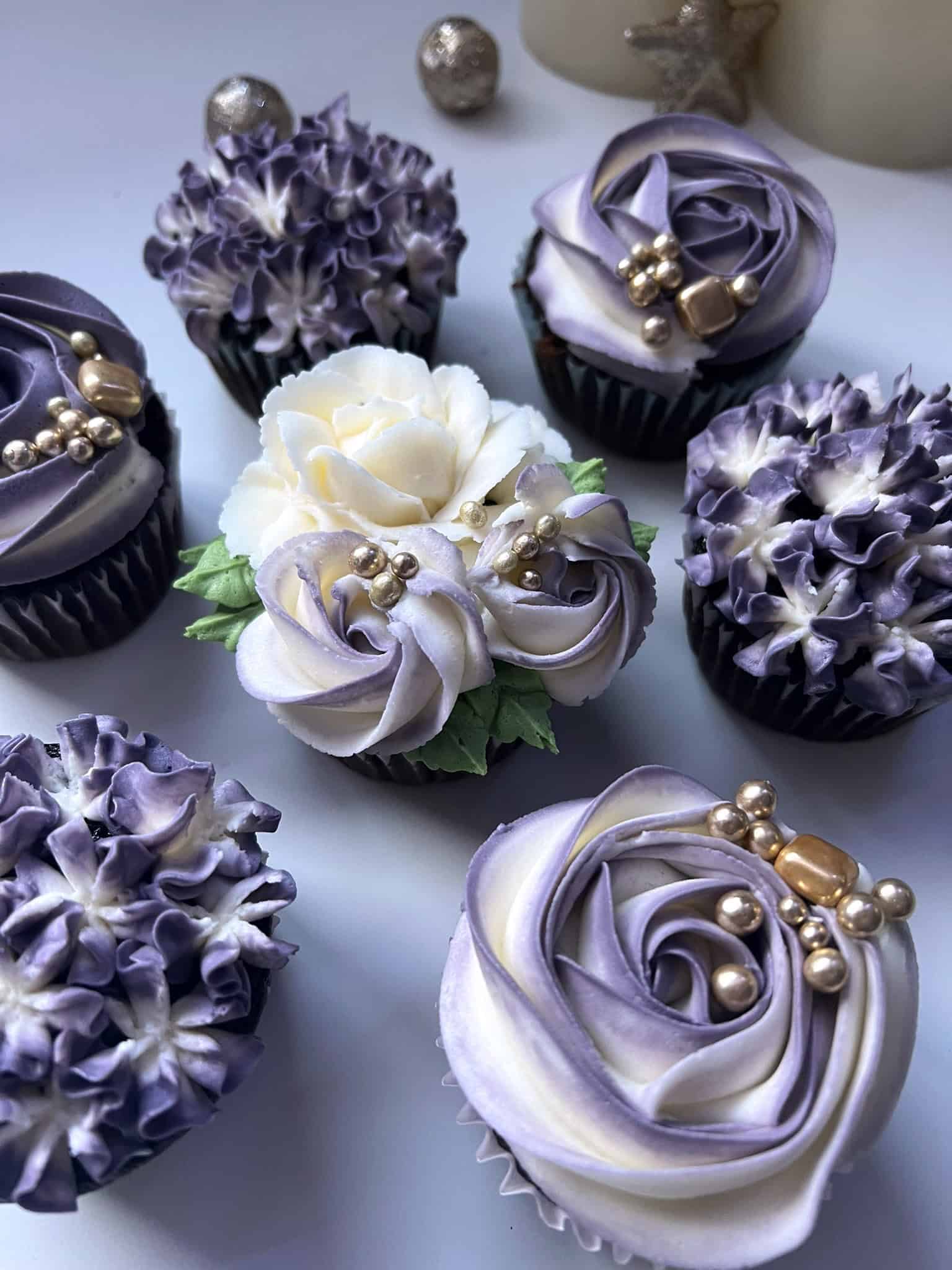
For example, a dozen simple cupcakes and a dozen individually piped floral cupcakes may use similar basic ingredients, but the floral cupcakes require considerably more decorating time and specialized skill.
There are different ways to account for labor when pricing baked goods. Some bakers use an hourly rate, while others build the value of their time and skill into their product pricing.
You don’t necessarily need to calculate an exact hourly wage for every order.
But you should consider:
- How long the product takes to make
- How complicated the design is
- How much decorating is involved
- Your level of skill and experience
- Whether the product requires specialized techniques
If two products cost roughly the same to make but one takes three times as long to decorate, they probably shouldn’t have the same selling price.
Choose a Markup
Once you understand your costs, markup can give you a starting point for your selling price.
Markup is the percentage added to your cost.
For example, if your cost is $20:
| Markup | Selling Price |
|---|---|
| 25% | $25 |
| 50% | $30 |
| 75% | $35 |
| 100% | $40 |
My recipe cost calculator uses markup to calculate an estimated selling price.
Markup Isn’t the Same as Profit Margin
These terms are sometimes used interchangeably, but they aren’t the same calculation.
Markup is based on your cost.
Profit margin is based on your selling price.
For example, a $20 cost with a 50% markup produces a $30 selling price. The $10 difference isn’t automatically your business profit because your business may have other costs to cover.
You don’t need to find one “correct” markup that works for every product. It’s simply one tool you can use when establishing a starting price.
Check Your Market
Once you’ve calculated your costs and arrived at a potential price, look at what similar products are selling for.
Try to compare products that are actually comparable:
- Similar size
- Similar level of decoration
- Similar ingredients
- Similar customization
- Similar type of customer
- Similar geographic market
The goal isn’t to simply copy another baker’s price.
Instead, use the market as another piece of information.
If your calculated price is significantly higher or lower than comparable products, it’s worth asking why.
Maybe:
- Your ingredients are more expensive
- Your packaging costs more
- Your product takes longer to make
- Your product is more elaborate
- You’re underestimating some of your costs
- Your business has higher overhead
Your costs tell you what you need to account for.
Your market tells you what customers may realistically be willing to pay.
Sometimes those two numbers don’t line up neatly, and that’s useful information to have before committing to a product.
Example: Pricing a Batch of Cupcakes
Let’s say you’re making 24 cupcakes.
Your direct costs are:
| Cost | Amount |
|---|---|
| Cupcake ingredients | $18.00 |
| Buttercream | $8.00 |
| Packaging and other decorations | $6.00 |
| Total direct cost | $32.00 |
Your direct cost per cupcake is:
$32 ÷ 24 = $1.33 per cupcake
If you apply a 50% markup:
$32 × 1.50 = $48
That gives you an estimated selling price of:
$48 per batch or $2.00 per cupcake
But this isn’t necessarily the final price you should charge.
The calculation tells you what the batch costs based on the costs you’ve entered and what price a 50% markup would produce.
You still need to consider the time and skill involved, your indirect business costs, the complexity of the product, and what similar products sell for in your market.
What Does This Actually Tell You?
Remember what we covered earlier: the $16 left after direct costs isn’t your profit. Your business still has indirect costs to cover, and no single order determines whether a business is profitable, that depends on your revenue across many orders over time.
Use this number as a starting point for understanding your product costs, not a verdict on your business.
Pricing Isn’t Just About the Recipe
A useful way to think about pricing is:
Direct costs → Time & skill → Indirect costs → Markup → Market
Start by understanding what the product costs you to make.
Then consider the time and skill involved, remember that your business has other expenses, use markup as a pricing tool, and compare the result with your market.
The price you first calculate may need to change and that’s fine.
You might decide to:
- Change the product
- Simplify the design
- Change your packaging
- Find a different supplier
- Adjust your markup
- Charge more
- Decide that a particular product isn’t practical for your business
Pricing can also change over time as your ingredient costs, suppliers, skills, products, and business expenses change.
How Do You Know If Your Price Is Right?
There isn’t one universal price for a cupcake, cake, cookie, or other baked good.
A price that works for one baker may not work for another.
The goal isn’t necessarily to be the cheapest option, nor is it to find a formula that guarantees a certain profit from every order.
Instead, you want to understand:
- What your product costs to make
- How much time and skill it requires
- What your business needs to cover
- What customers in your market are willing to pay
That gives you much more information to work with than simply looking at what another baker charges and copying their price.
Final Thoughts
There’s no single formula that every baker uses to price their products. The approach in this guide starts with understanding your actual costs, but it’s not the only way to arrive at a selling price.
Some bakers use a set price per item, while others use a base price plus additional charges for things like custom designs, specialty flavors, fillings, or other extras. Some may also look closely at what similar businesses in their market are charging.
A cost-based approach gives you a useful foundation because it starts with what the product actually costs you to make. From there, your time, skill, indirect costs, product complexity, and market all help determine whether the final price makes sense.
The important thing is not finding one “perfect” pricing formula. It’s understanding your numbers well enough to make an informed decision about what to charge for your products and your business.
Start with your costs, then use that information alongside your experience and your market to set a price that works for you.
If you want to start with the numbers, try my free Recipe Cost Calculator to calculate your recipe and additional costs.
If you’re thinking about starting a home baking business, you can also read Things to Consider Before Starting a Home Bakery for the bigger-picture questions to think through before you begin.